
Key Takeaways
- Hidden Moisture Intrusion: Warped or buckled siding boards break your home's weather seal, letting rain soak into the wall sheathing and framing.
- Installation and Aging Factors: Boards usually warp because nails were driven too tightly into vinyl or because older wood and composite boards have absorbed years of humidity.
- Cost-Effective Solutions: Minor siding patches typically cost $150 to $400, while full replacements with James Hardie fiber cement range from $20,000 to $35,000 for a typical home.
Need Siding Installation in Birmingham?
If you're looking for help in Birmingham, visit our dedicated siding installation page for local service details, project examples, and the next steps for your home.
What Warped Siding Means for Homes Across Jefferson & Shelby Counties
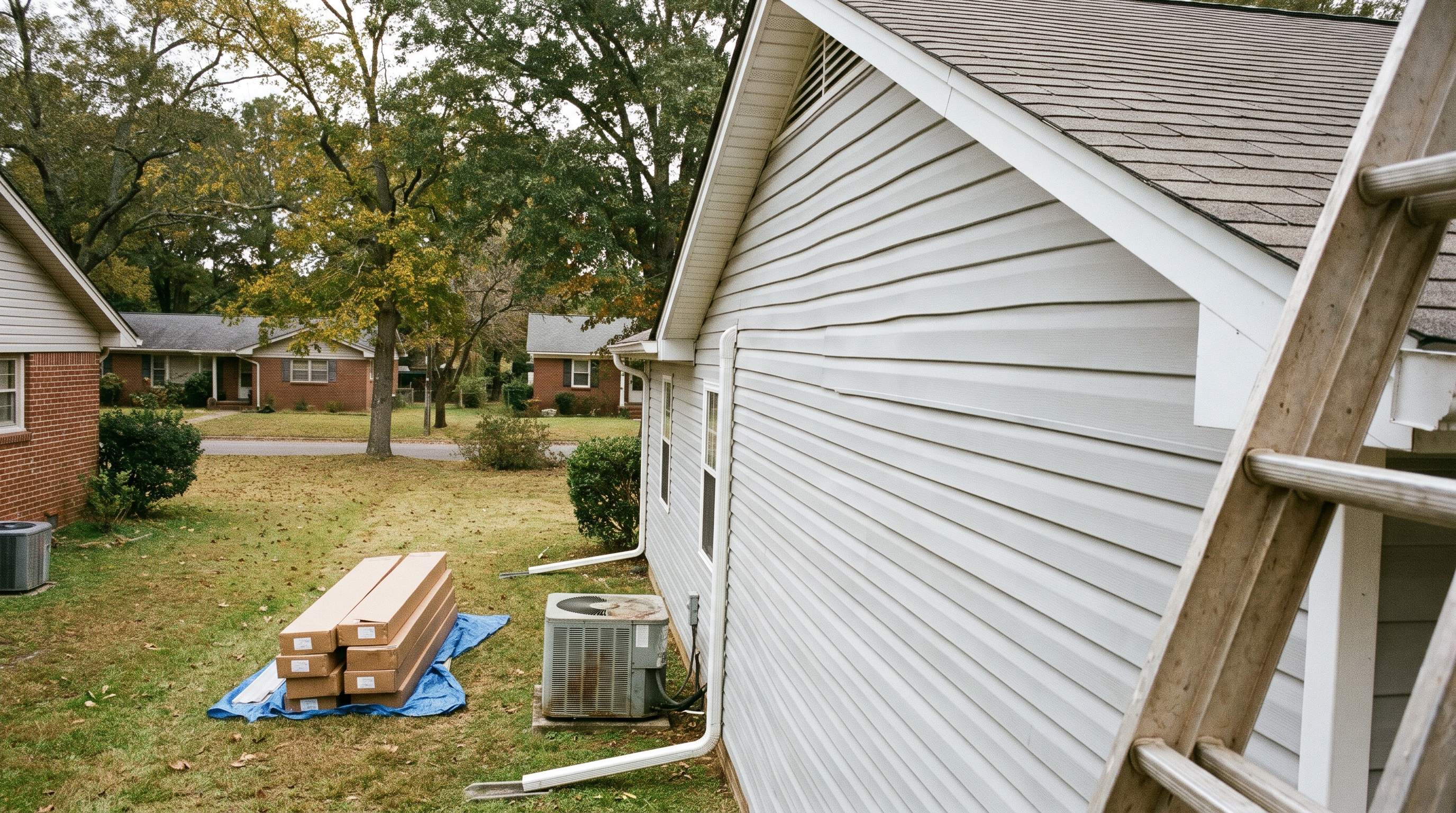
A homeowner stands at the edge of the driveway in late fall, staring at a wavy horizontal bulge along the second-story gable that was not as noticeable in the summer. They already tried pushing the bowed panel flat with a broom handle and squeezing a tube of hardware-store caulk into the open seam, assuming the gap was sealed for winter. When our crew pulls that distorted plank off the wall, we find the caulk trapped rainwater against the bare oriented strand board sheathing, turning the structural wood around the window frame soft and dark. That single rippled board is rarely a surface-level blemish; it is the outward warning sign that your exterior wall assembly is taking on water or fighting restricted movement. Catching those warped boards early is the difference between a simple siding installation in Birmingham and rebuilding rotted wall studs.
Older residences across the area, from classic craftsman bungalows to sprawling brick-and-siding ranches in Vestavia Hills and Irondale, face heavy wear from Central Alabama's muggy summers and rapid autumn cool-downs. Inspecting aging lap boards and replacing damaged wall cladding on these historic and mid-century houses shows us firsthand how outdated materials react when the weather shifts.
Why Siding Boards Buckle and Bow on Older Houses
Siding boards warp primarily because improper fastener placement restricts natural movement or because aging wood-based materials absorb moisture and swell unevenly. Identifying the exact material on your walls tells you immediately what caused the distortion.
If your home has vinyl cladding, the culprit is almost always nail hem restriction. Vinyl expands and contracts as temperatures shift. Installers must center the nail in the factory slot and leave a tiny gap between the nail head and the vinyl so the panel can slide back and forth. When someone drives a nail tight against the plastic, the board has nowhere to go when it warms up, forcing it to buckle outward. We broke down the mechanics of thermal distortion in our article on how heat warps vinyl in Birmingham.
On older homes with original cedar lap siding or 1980s hardboard composites, moisture is the driver. Paint eventually cracks along the bottom drip edge and butt joints. Humid air and wind-driven rain wick into the raw fibers, causing the bottom half of the board to swell while the top stays pinned to the studs. Over several seasons, that uneven swelling twists the plank out of plane.
Expert Field Note from Justin Johnson: , Co-Owner: On older split-level and ranch houses around Birmingham and Mountain Brook, we consistently see warped boards directly below the ends of roof gutters. A tiny gap at the fascia board lets roof runoff trickle behind the top course of siding, rotting the wood furring strips and pushing the lower boards outward long before any water stain shows up on the interior drywall.
What Happens Behind the Wall When You Wait
Leaving a warped siding board unaddressed allows wind-driven rain and pests to bypass your exterior cladding and attack the structural framing of your house. Siding is a rainscreen, not a waterproof seal, and it relies on flat, overlapping joints to shed water downward.
Once a board bows outward, it opens a gap along the bottom lock or overlap seam. Autumn rainstorms push water straight into that opening. Even if your home has a weather-resistant house wrap underneath, trapped moisture sitting against nail penetrations will eventually seep into the plywood or OSB sheathing. If the distortion sits near a window frame, water often follows the framing studs down into the sill plate, mimicking the symptoms of window replacement leaks.
Beyond wood rot, those open gaps act as an open door for wildlife and insects in late fall. Wasps, stink bugs, and carpenter ants look for warm cavities behind loose boards before the first freeze hits. Mice and squirrels can chew through exposed sheathing once a warped panel gives them a foothold under the eaves.
How to Inspect Your Exterior Before Winter Rains
Homeowners can spot early siding distortion by viewing walls from a sharp side angle in direct sunlight and checking vulnerable transition points around the house. Walking straight up to a wall makes shallow waves hard to see, so stand at the corner of the house and look down the length of the wall.
- Sight down the south and west walls: These elevations take the brunt of afternoon sun and wind, making them the first places where pinned vinyl or dry wood planks pull out of alignment.
- Check around exterior outlets and hose bibs: Installers frequently cut holes too tight around utility penetrations, pinching the siding so it bows outward on either side of the fixture.
- Look below roof-to-wall intersections: Examine dormer walls and chimney sides where roof runoff concentrates, as swollen boards here often point to needed roof repair in Birmingham where step flashing meets the wall.
- Press gently on wavy sections: If a vinyl board feels rock-hard and refuses to slide a fraction of an inch left or right, it is nailed too tightly. If a wood or fiber board feels spongy or crumbles at the bottom edge, moisture has rotted the core.
- Inspect the trim and soffits: Peeling paint on corner boards or sagging soffit panels usually accompanies warped lap boards, signaling that water is getting behind the entire trim package.
Repair vs. Replacement: Comparing Costs and Materials
Deciding between a targeted repair and a full siding replacement depends on whether the warping is isolated to a few boards or spread across multiple walls due to age or systemic installation errors. When you hire residential siding contractors in Birmingham, a proper assessment starts with pulling a loose board to inspect the sheathing underneath.
For isolated damage, most homeowners pay $150 to $400 for a minor patch involving a few vinyl boards, while a larger section replacement typically runs $500 to $1,500. If you have fiber cement siding that requires a multi-section repair with custom color matching, costs typically range from $2,500 to $6,500. You can explore a broader breakdown of local project budgets in our guide covering the average cost of siding in Birmingham.
When warping appears on three or four sides of the house, patching becomes a losing battle. Upgrading the entire exterior lets us install a modern moisture barrier and premium cladding that will not twist in Alabama humidity. For instance, on a recent full exterior renovation in Forest Park, we installed white horizontal lap siding along the dormers and upper walls to contrast with the dark-painted window trim and fascia, pairing it with brown architectural shingle roofing and tight black metal chimney flashing.
| Siding Material | Cost Per Sq Ft | Typical Home Total | Warping & Weather Resistance |
|---|---|---|---|
| Vinyl Siding | $4 – $8 | $8,000 – $16,000 | Resists moisture and insects; requires proper loose-nailing to prevent heat distortion. |
| Engineered Wood | $7 – $12 | $14,000 – $24,000 | Treated to resist rot and termites; offers natural wood grain with strong dimensional stability. |
| Fiber Cement (James Hardie) | $10 – $16 | $20,000 – $35,000 | Superior stability in heat and humidity; will not warp, rot, or ignite. |
James Hardie fiber cement siding is our top recommendation for homeowners tired of dealing with warped wood or wavy vinyl. Because fiber cement is composed of cement, sand, and cellulose fibers, it does not expand and contract like plastic or swell like untreated wood, giving you crisp shadow lines that stay flat for decades.
Frequently Asked Questions
Can warped vinyl siding be flattened without replacing the boards?
Sometimes, if the vinyl has not developed a permanent crease from sitting bent in the sun for years. A siding technician can unhook the bowed course using a zip tool, remove the over-driven nails that are pinching the panel, and re-fasten it properly so the board relaxes back into place. If the plastic is permanently stretched or creased, the damaged planks must be swapped out.
How much does siding repair in Birmingham, AL typically cost?
Most homeowners pay between $150 and $400 for a small vinyl patch involving just a few boards. Replacing a full wall section typically costs $500 to $1,500, while a large multi-section fiber cement repair with paint matching ranges from $2,500 to $6,500 depending on wall height and sheathing condition.
Does homeowner's insurance cover warped siding boards?
Insurance policies generally do not cover siding that warps from age, humidity, or improper original installation, as adjusters classify those issues as wear and tear or workmanship defects. However, if windstorms rip panels loose or hail cracks the boards alongside damage from summer heat warping siding, your policy may cover repairs subject to your deductible and whether you carry replacement cost value (RCV) or actual cash value (ACV) coverage.
Is late fall a good time for siding installation in Birmingham?
Late fall is an ideal window for siding work in Central Alabama because the lower humidity and mild daytime temperatures allow caulk, primers, and exterior paints to cure cleanly. For vinyl installations, experienced crews leave slightly wider expansion gaps at the corner posts during cool weather so the panels have plenty of room to expand when hot summer weather returns.
Protecting Your Exterior Before Cold Weather Settles In
Addressing buckled planks and open lap seams before winter rainfall arrives keeps water out of your structural wall studs and stops minor exterior repairs from turning into framing rebuilds. Spend a few minutes walking around the outside of your house and sighting along each wall from the corners, checking closely beneath windows and roof valleys. Whenever you are ready to have someone look at a loose board or review siding samples for your home, give us a call and we can set up a convenient time for an inspection.
Ready to stop researching and get real answers?
If this article helped you spot a roofing, siding, or gutter issue, the next step is simple. Get honest guidance, a professional inspection, and a clear plan from the Patriot Roofing team.
Justin Johnson
Owner / Licensed Home Builder
Justin is the Co-Owner of Patriot Roofing & Builders and a Licensed Alabama Home Builder. With extensive experience in high-performance exterior systems and storm restoration, he brings a hands-on, technical perspective to every project across the Greater Birmingham area.
More About UsSiding Installation in Birmingham

You Might Also Like
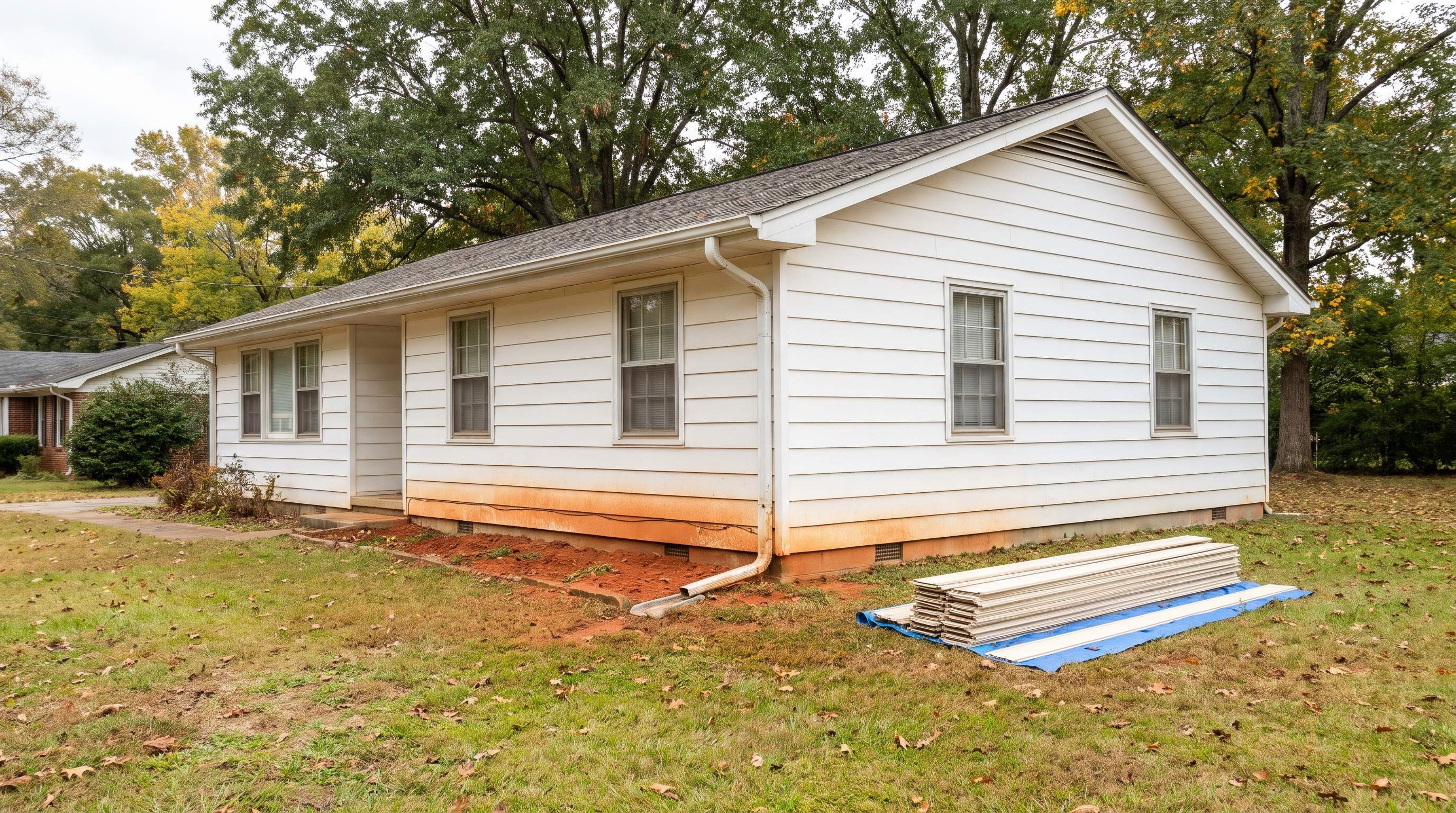
How Clay Soil Ruins White Siding in Birmingham, AL.