Key Takeaways
- Moisture accumulation beneath metal panels causes wooden roof decks to swell, buckle, and warp.
- Using high-temperature synthetic underlayment prevents moisture from penetrating the wood substrate.
- Balanced attic ventilation is essential to regulate temperature and humidity levels under the roof.
Need Metal Roofing in Birmingham?
If you're looking for help in Birmingham, visit our dedicated metal roofing page for local service details, project examples, and the next steps for your home.
The Impact of Alabama Moisture on Roof Decking
High ambient humidity in Central Alabama causes wooden roof decks to absorb moisture, leading to swelling, warping, and structural movement beneath the roofing material. The sub-tropical climate of Jefferson County brings persistent humidity throughout the year, forcing attic spaces to trap heavy, moisture-laden air. When this humid air condenses on the underside of your roof decking, the wood expands, leading to structural shifts that can ruin a premium metal installation.
In older neighborhoods like Forest Park and Highland Park, homes often feature original wood plank decking that is highly susceptible to moisture absorption. When planning a roof replacement in Birmingham, evaluating the condition of this underlying wood is just as important as choosing the final metal panels. Laying new metal over compromised wood guarantees future structural failures, as the warped decking eventually pushes fasteners loose and creates visible waves across your roofline.
Our crews frequently find that older homes require localized deck repairs or full sheet replacements before we can install a modern metal system. A solid, flat foundation is the single most critical factor in ensuring your metal roof lasts its full lifespan. Addressing these hidden moisture issues early protects your home from costly structural damage down the road.
How High Humidity Warps Roof Substrates Beneath Metal Panels
High humidity warps roof substrates because wood naturally absorbs moisture from unventilated attic spaces, expanding in size while the rigid metal panels above restrict outward movement. This moisture absorption causes the wood boards or plywood sheets to cup, bow, or buckle at the seams. When you couple this moisture with the intense heat of an Alabama summer, the wood undergoes rapid thermal and physical changes that permanently damage its structural stability.
When homeowners upgrade to premium metal roofing in Birmingham, the installation must account for the natural expansion and contraction of both the steel panels and the wooden deck. This thermal expansion occurs daily as temperatures swing. If the wood deck absorbs moisture and swells, the expanding wood has nowhere to go but upward, creating unsightly ridges and buckles beneath the metal panels. Over time, this movement causes several severe issues:
- Visible Waves or Ripples: The metal panels may appear wavy or uneven when viewed from the street under direct sunlight.
- Loose Fasteners: Wood expansion can slowly back screws out of the deck, leaving visible gaps beneath the screw heads.
- Creaking or Popping Noises: As the warped wood shifts against the metal panels during temperature changes, you may hear distinct popping sounds.
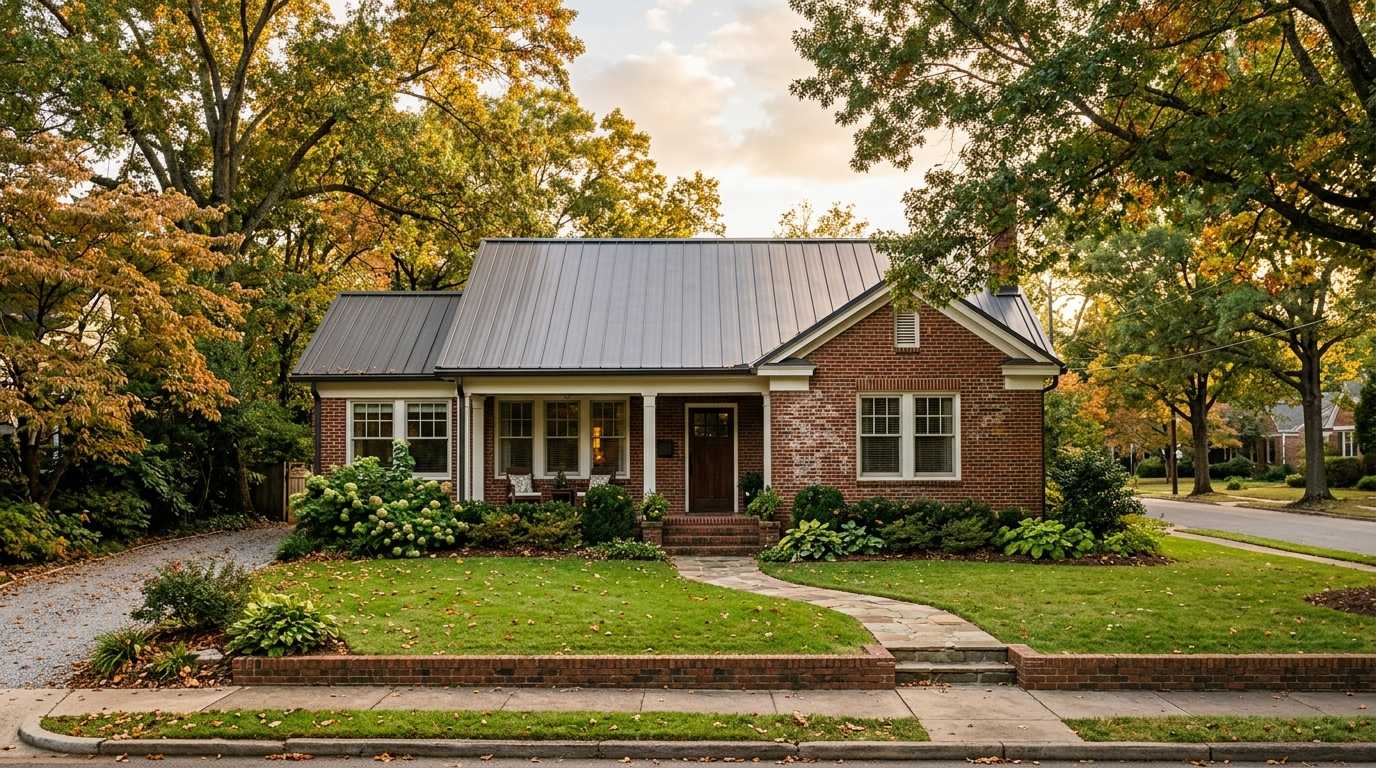
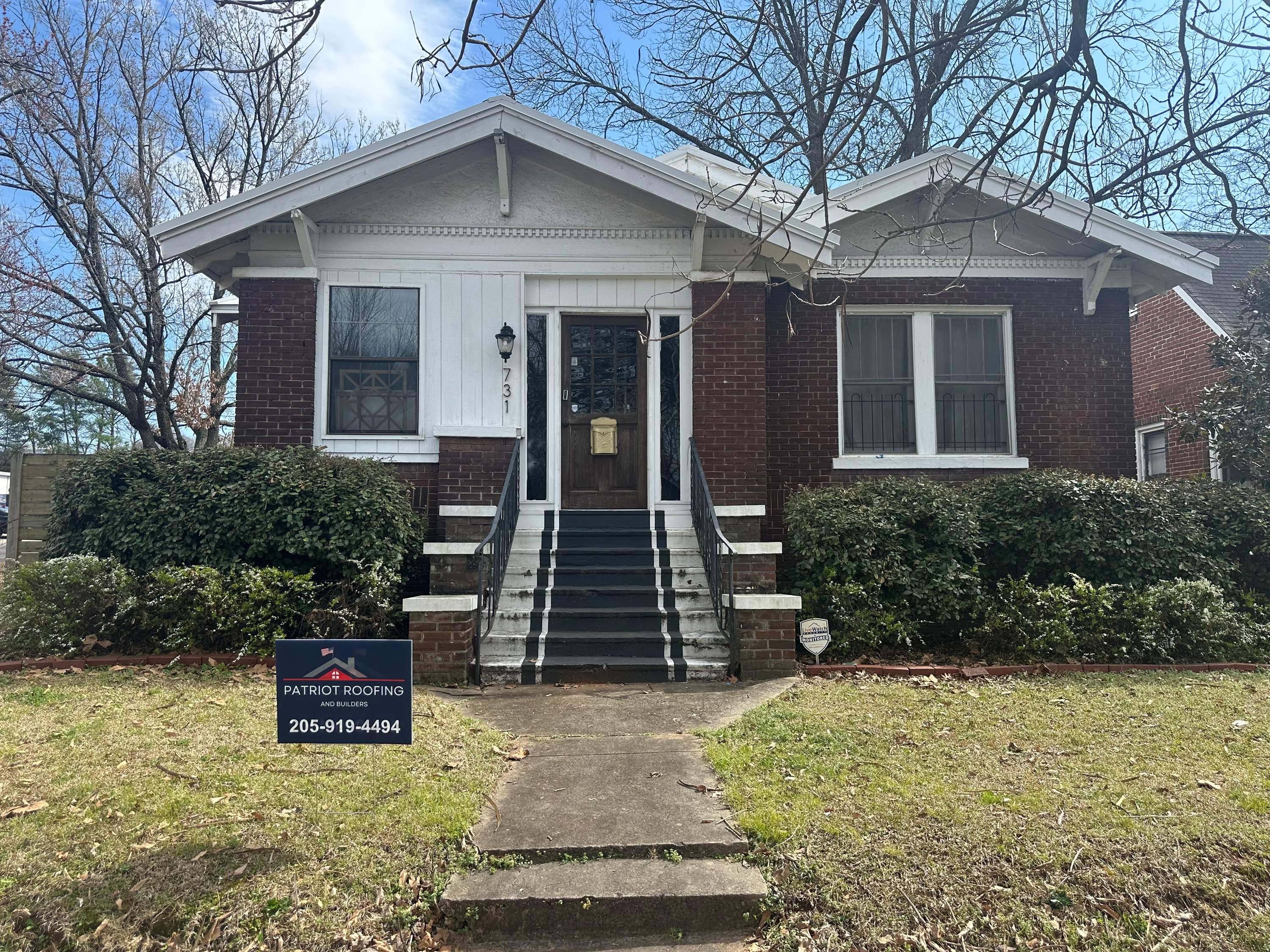
For example, a recent project involving a Standing Seam Metal Roof in Glen Iris, Birmingham, AL started with stripping the worn shingles down to the wood deck and sealing it with a leak-barrier underlayment before any panel went on, so the substrate was dry and flat under the new system.
Comparing Substrate Performance Under Extreme Humidity
Comparing different wood decking materials reveals that solid wood planks and high-quality plywood handle high humidity far better than standard oriented strand board (OSB). OSB consists of compressed wood strands bound with wax and synthetic resins, which tend to absorb moisture rapidly at the edges. Once OSB edges swell from high humidity, they do not shrink back to their original shape, leaving permanent ridges under your metal panels.
Before finalizing your material choices, scheduling a professional roof inspection helps determine whether your existing deck can support a new metal system. Different wooden substrates react uniquely to Alabama's muggy summers, as detailed in the comparison below.
| Substrate Type | Moisture Resistance | Warping Risk | Best Application |
|---|---|---|---|
| Solid Wood Planks | Moderate | High | Historic homes in Highland Park |
| CDX Plywood | High | Low | Standard residential upgrades |
| Oriented Strand Board (OSB) | Low | High | Budget-conscious roof builds |
The Role of Underlayment and Ventilation in Preventing Deck Warp
Preventing deck warping beneath metal panels requires a combination of high-temperature synthetic underlayment and a balanced attic ventilation system. Traditional organic felt underlayment degrades quickly under metal panels because metal transfers extreme solar heat directly to the roof deck. Synthetic underlayments, however, act as a durable moisture barrier that prevents humid air from condensing on the wood while resisting thermal breakdown.
Expert Field Note from Justin Johnson: On older bungalows around Glen Iris, we often find original solid pine roof decks that have cupped because the attic lacked ridge ventilation, forcing the boards to pull the nails straight out of the rafters. We always check the attic's intake and exhaust balance before laying down any new high-temp synthetic underlayment.
Proper attic ventilation draws cool, dry air through the soffits and expels hot, humid air through the ridge vents, keeping the attic temperature close to the outside temperature. This process prevents moisture from condensing on the underside of the wood deck. In addition, when we perform a gutter installation, we ensure that water is directed away from the eaves, preventing wood rot along the roof edges. Here are the main benefits of using a premium synthetic barrier over traditional felt:
- Thermal Stability: Synthetic underlayments do not degrade, tear, or melt when exposed to the high heat transferred by metal panels.
- Moisture Resistance: They create a completely watertight barrier that prevents humid air from reaching the wood deck.
- Durability: Unlike traditional organic felt, synthetic sheets do not rot or wrinkle when exposed to moisture during installation.
Typical Costs for Metal Roofing and Deck Repairs in Birmingham
The cost of metal roofing and associated deck repairs in Birmingham depends primarily on whether you choose a standing seam system or an exposed-fastener panel. If your existing wood deck is warped or rotted, replacing the damaged sheets adds to the overall project cost but is necessary to ensure a flat, secure installation. Investing in proper substrate preparation prevents you from having to pay for double labor costs later to fix a buckling roof.
When budgeting for a metal roof, you should understand the typical price ranges across the Birmingham metro area:
- Standing seam metal roofing: Typically costs $9 – $14 per sq ft.
- Exposed-fastener or corrugated metal: Typically costs $5 – $8 per sq ft.
- Minor repairs (seal panel gap, small patch, fasteners): Typically range from $150 – $600.
- Typical repairs: Usually cost between $600 – $1,900.
- Major repairs (multiple panels, section recoat): Typically cost $1,900 – $3,500.
If you suspect your current deck is already warped, securing a prompt roof repair in Birmingham can prevent a minor moisture issue from turning into a major structural replacement. Addressing these substrate issues before the next storm season ensures your home remains dry and structurally sound.
Frequently Asked Questions
How does high humidity affect a metal roof deck?
High humidity forces the wooden deck boards beneath the metal panels to absorb moisture and swell. Without proper attic ventilation, this expansion causes the wood to cup, buckle, or warp, which can compromise the flat appearance and watertight seal of the metal panels above.
Can you install a metal roof over warped decking?
No, installing new metal panels over warped or cupped decking is never recommended. The uneven surface prevents the metal panels from laying flat, which can stress the fasteners, cause panels to back out, and lead to leaks during heavy Alabama rainstorms.
What is the best underlayment to prevent moisture damage under metal roofs?
A high-temperature synthetic underlayment is the best choice for metal roofing systems. This durable barrier protects the wood deck from moisture infiltration while resisting the extreme heat that metal panels transfer to the roof structure during hot summer days.
Does a warped roof deck always require full replacement?
Not always. If the warping is localized to a small area, a qualified contractor can perform a targeted repair. However, if the entire deck has buckled due to widespread attic humidity, replacing the wood substrate is necessary to ensure a flat, secure base for your new roof.
Protecting Your Birmingham Home From Hidden Deck Failures
Protecting your home's roof deck from humidity-driven damage requires proactive moisture management and professional installation techniques. We often find that homes suffering from poor roof ventilation also have moisture issues affecting their exterior walls. If your home's envelope is compromised, consulting with residential siding contractors in Birmingham can help you address wall ventilation and moisture barriers in tandem with your roofing system.
Ignoring a slightly warped deck board today allows moisture to slowly rot your structural rafters, turning a simple repair into an expensive multi-thousand-dollar rebuild. Scheduling a professional inspection with our crew is the safest way to evaluate your wood deck before the next heavy rain season.
Ready to stop researching and get real answers?
If this article helped you spot a roofing, siding, or gutter issue, the next step is simple. Get honest guidance, a professional inspection, and a clear plan from the Patriot Roofing team.
Justin Johnson
Owner / Licensed Home Builder
Justin is the Co-Owner of Patriot Roofing & Builders and a Licensed Alabama Home Builder. With extensive experience in high-performance exterior systems and storm restoration, he brings a hands-on, technical perspective to every project across the Greater Birmingham area.
More About UsMetal Roofing in Birmingham
 9 photos
Standing Seam Metal Roof in Glen Iris, Birmingham, AL
Glen Iris
Located in the Glen Iris neighborhood of Birmingham, this brick bungalow received a complete roof replacement. The worn shingles were stripped away to expose the wooden deck, which was then sealed with a protective leak-barrier underlayment. The finished system utilizes light gray standing seam metal roofing panels with defined vertical ribs and matching metal ridge caps. These panels integrate around the existing brick chimney and plumbing vents, updating the home's protection while complementing the dark brick and white trim.
 12 photos
Standing Seam Metal Roof on Lay Lake in Wilsonville, AL
Lay Lake, Wilsonville
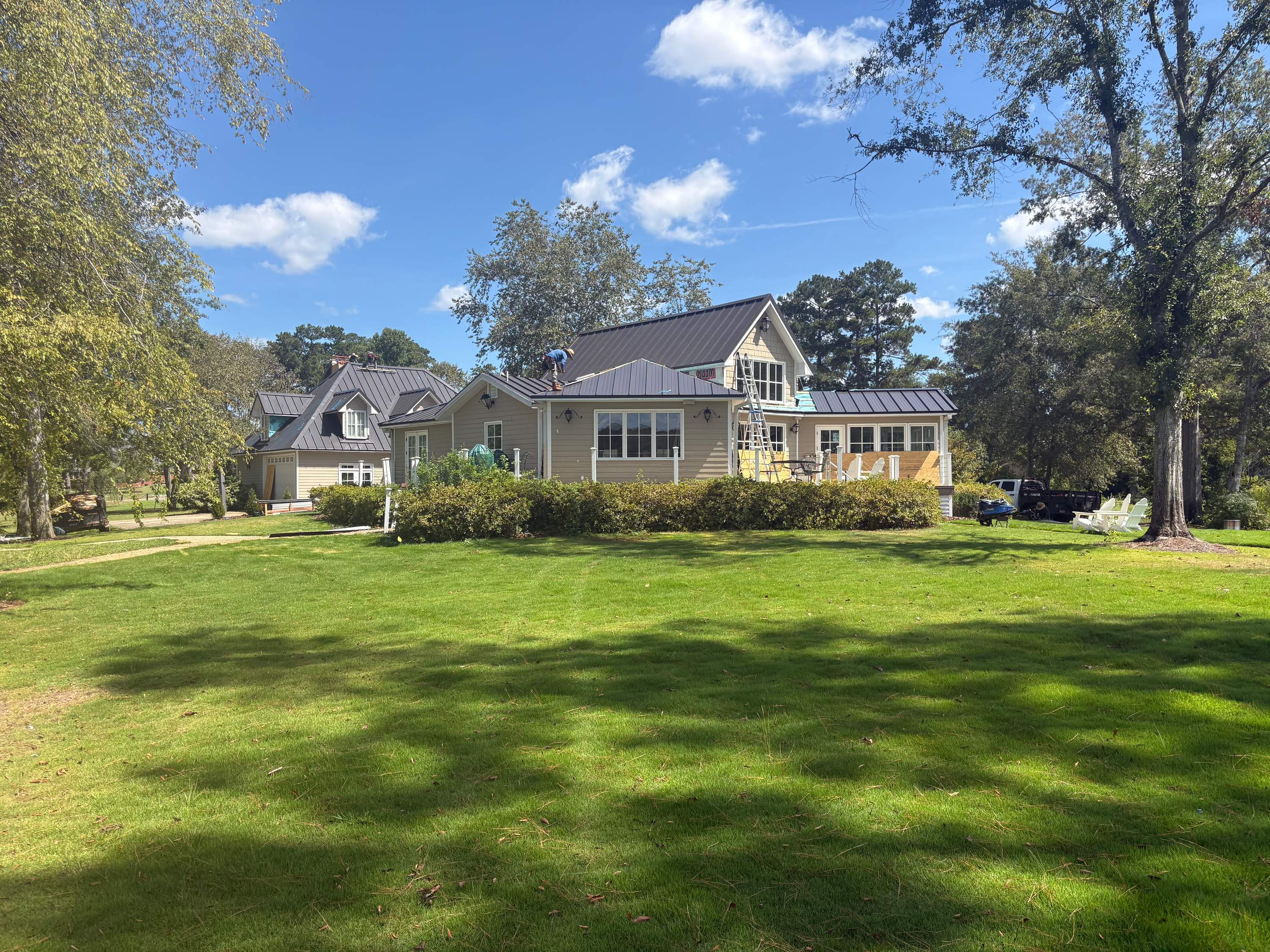
A lakefront home on Lay Lake in Wilsonville is receiving a full standing seam metal roof in dark bronze. The same panel runs across the main house, the detached carriage house with its row of front dormers, and the boathouse out over the water. Standing seam is a concealed fastener system, so the panels lock together at raised vertical seams rather than being screwed through the face, which lets the metal expand and contract with temperature swings without working against its fasteners. Before any panel went down, a self-adhering StormGuard leak barrier was installed in the valleys and up the dormer sidewalls, with Grip Rite synthetic underlayment across the remaining deck. The stone chimney and the dormer walls are being flashed as the panels reach them.
You Might Also Like
What Does Hail Damage to Shingles Look Like in Birmingham?