
Key Takeaways
- Steep, multi-gable rooflines across Mountain Brook funnel massive volumes of rainwater into narrow metal valleys where aged flashing or mid-fall leaf debris forces water sideways under the shingles.
- Topical caulk and hardware-store sealants around chimneys and pipe boots crack during Alabama's seasonal temperature swings, turning minor flashing gaps into active leaks during wind-driven storms.
- Permanent leak resolution requires tracing water along the structural decking and mechanically integrating new flashing and GAF waterproof barriers rather than smearing roofing cement over surface seams.
Need Roof Repair in Mountain Brook?
If you're looking for help in Mountain Brook, visit our dedicated roof repair page for local service details, project examples, and the next steps for your home.
How Severe Weather Exploits Complex Jefferson County Rooflines
Severe storms cause roof leaks in Mountain Brook by forcing high volumes of wind-driven rain and falling oak debris against steep valleys, custom dormers, and aging metal flashing that cannot drain fast enough. While a gentle rain might glide right over a compromised seam, a heavy Central Alabama thunderstorm pressurizes water against every transition point on your estate's exterior.
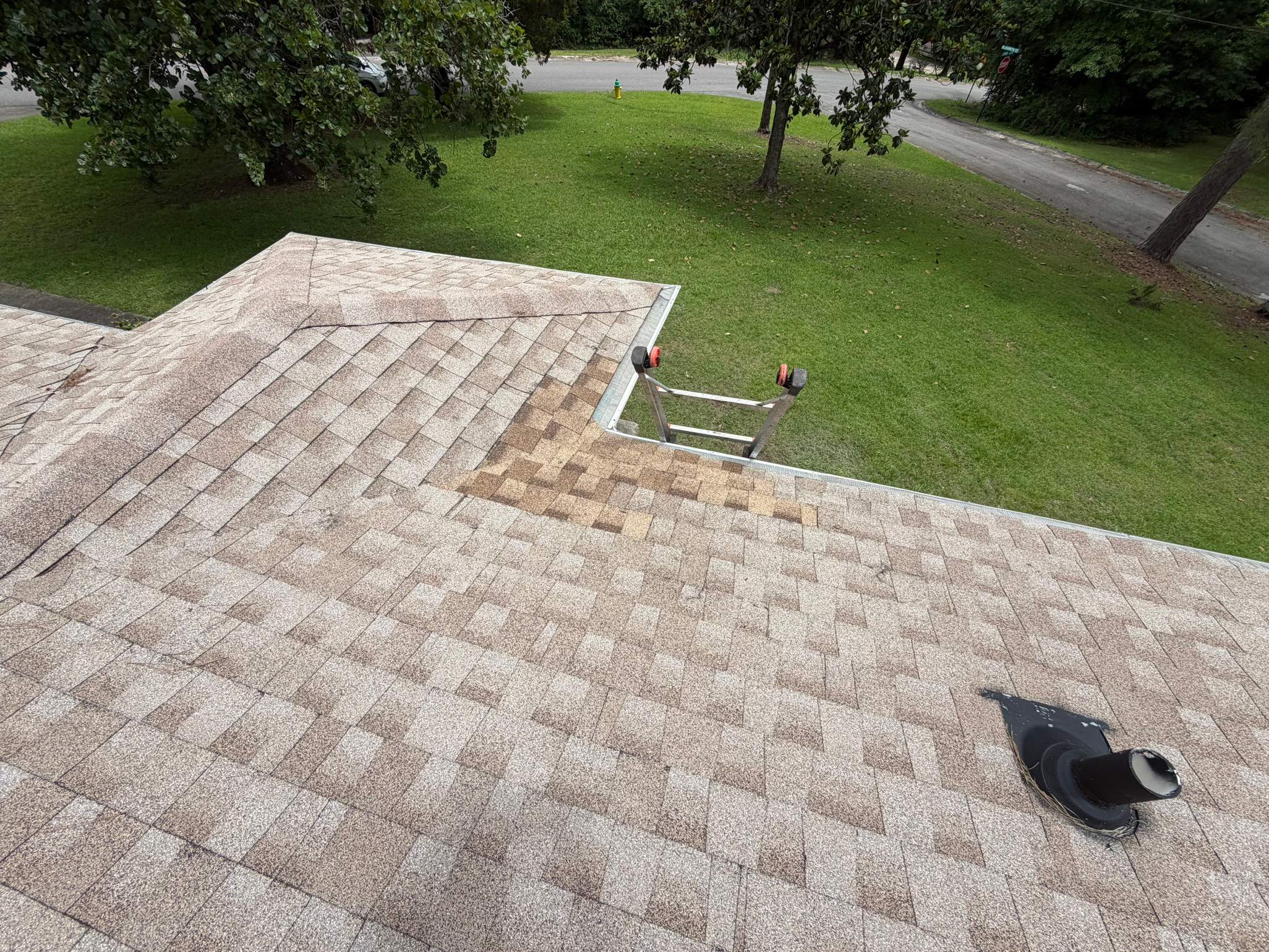
Older homes throughout our area feature steep pitches, intersecting gables, and custom masonry chimneys. These architectural details give neighborhoods their classic character, yet every intersection creates a seam where two different materials meet. When spring squalls or mid-fall cold fronts push sideways rain across Jefferson County, those seams bear the brunt of the water load.
Homeowners often assume a ceiling stain in the living room means the shingles directly overhead failed. In reality, water enters at a vulnerable flashing point higher up the slope, travels along the plywood decking or rafters, and drops onto the plaster several feet away. Securing true roof repairs in Mountain Brook requires looking past the interior drywall stain and diagnosing how the roof system handles high-velocity watershed.
5 Overlooked Reasons Storms Trigger Leaks on Older Estates
Five specific mechanical vulnerabilities cause the vast majority of storm-related water intrusion on historic and custom-built properties. Many contractors gloss over these systemic issues during a quick driveway estimate because fixing them properly takes skilled carpentry and custom metalwork rather than a tube of sealant.
- Choked Open Metal Valleys: Steep roofs move water fast. When two roof planes meet in a valley, they concentrate runoff from hundreds of square feet into a narrow channel. In mid-fall, heavy oak leaves and twigs settle into these valleys and catch on exposed nail heads or transitions, creating miniature dams that force cascading water sideways past the shingle edges and straight onto the wood decking.
- Topical Caulk Used Instead of Mechanical Flashing: Previous repair crews frequently smear black roofing cement or silicone caulk over leaking chimney counter-flashing or dormer walls. Alabama heat bakes these topical compounds until they shrink and pull away from the brick, leaving an open funnel waiting for the next downpour.
- Rotting Eaves Disguised as Peeling Paint: Water backing up at the roof edge soaks into the wooden fascia and soffit boards. Homeowners frequently hire painters to scrape and repaint soft wood along the eaves without realizing that storm runoff is bypassing the drip edge and wicking straight into the rafter tails.
- Micro-Punctures from Falling Limbs: Mature hardwood canopies drop heavy branches during straight-line winds. Even when a limb does not punch a hole through the attic, the blunt impact fractures the fiberglass mat inside architectural shingles or cracks individual slates, allowing water to seep through during prolonged rain.
- Undersized or Missing Cricket Diverters: Wide masonry chimneys sitting down-slope on a steep roof block the path of rushing rainwater. Without a properly framed and flashed saddle (cricket) behind the brick, storm runoff pools against the upper mortar joints until it overwhelms the step flashing.
Addressing these vulnerabilities early prevents secondary damage to custom millwork and hardwood floors. We covered several related structural symptoms in our breakdown of common roof problems in Mountain Brook, which helps homeowners spot trouble before storm season peaks.
Expert Field Note from Justin Johnson: Diagnostic Observation, Justin Johnson: Across steep, custom-built roofs in Jefferson County, the most common hidden storm leak we uncover sits behind wide masonry chimneys where a previous crew cut a shallow groove into the brick and filled it with urethane caulk instead of weaving true step and counter-flashing into the mortar joints. Two hot Alabama summers dry that sealant right out, letting wind-driven rain sheet down the brick face behind the metal and rot the wood framing around the firebox long before a single drop ever spots the living room ceiling.
Why Hardware-Store Sealants Fail During Alabama Downpours
Hardware-store sealants and elastomeric roof patches fail because metal flashing, masonry chimneys, and asphalt or slate roofing materials expand and contract at different rates as outdoor temperatures swing. A dab of caulk cannot bridge a moving structural joint for long.
Consider a typical mid-fall week in Central Alabama. Crisp mornings give way to warm, sunny afternoons that heat dark roof surfaces rapidly. Copper and steel flashing expand faster than the surrounding brick or wood trim. That daily thermal movement shears the bond of surface-applied mastics, creating hairline splits that open right where water channels down the roof.
Permanent leak remediation relies on gravity and mechanical overlap rather than chemical adhesives. When we perform residential roof repair, our crews pull back the surrounding shingles, remove the rotted underlayment, and install new step flashing and counter-flashing that interlock with the roof deck and masonry. Water stays out because the metal channels guide it down the slope, not because a bead of sealant is holding back a puddle.
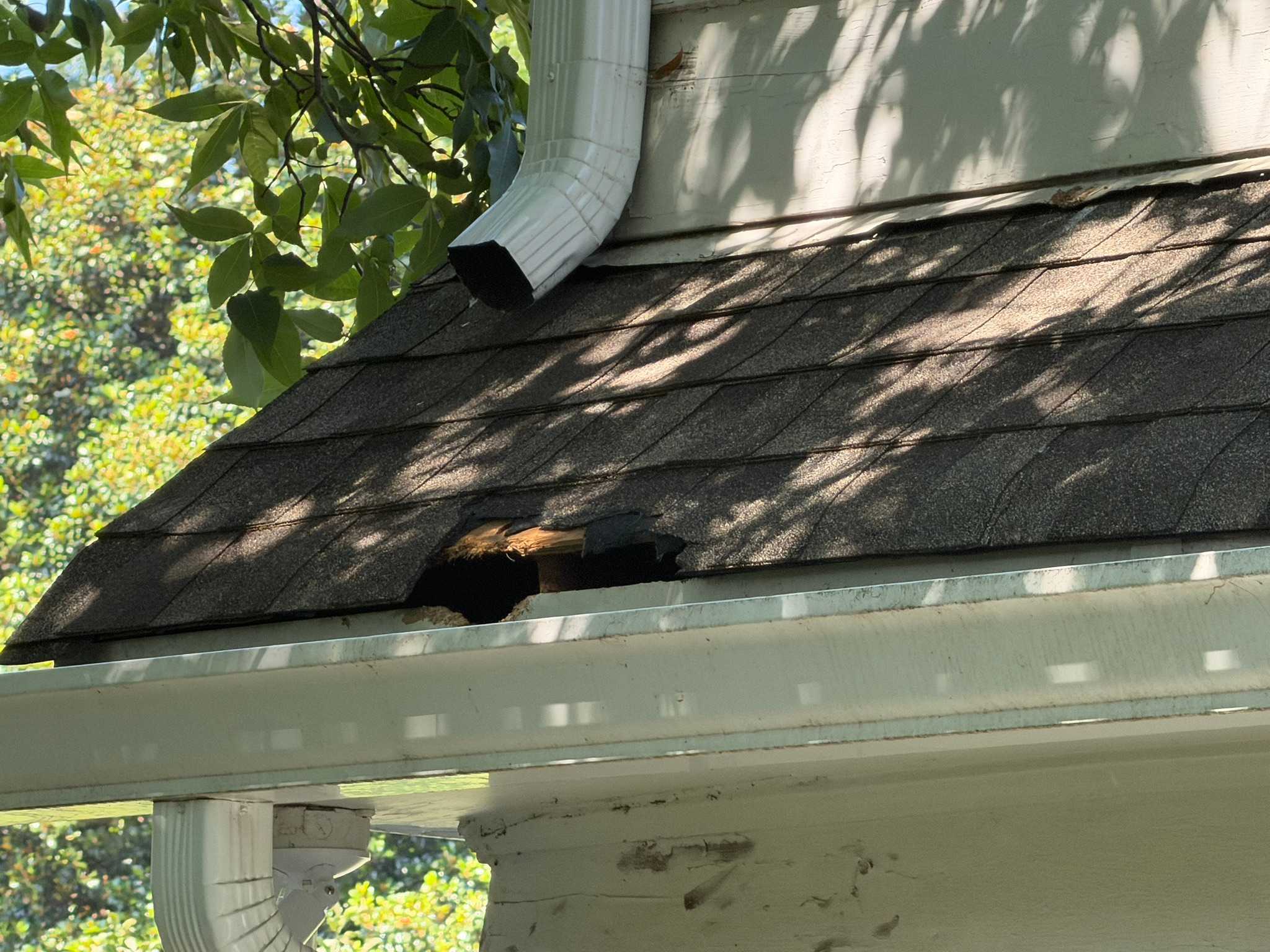
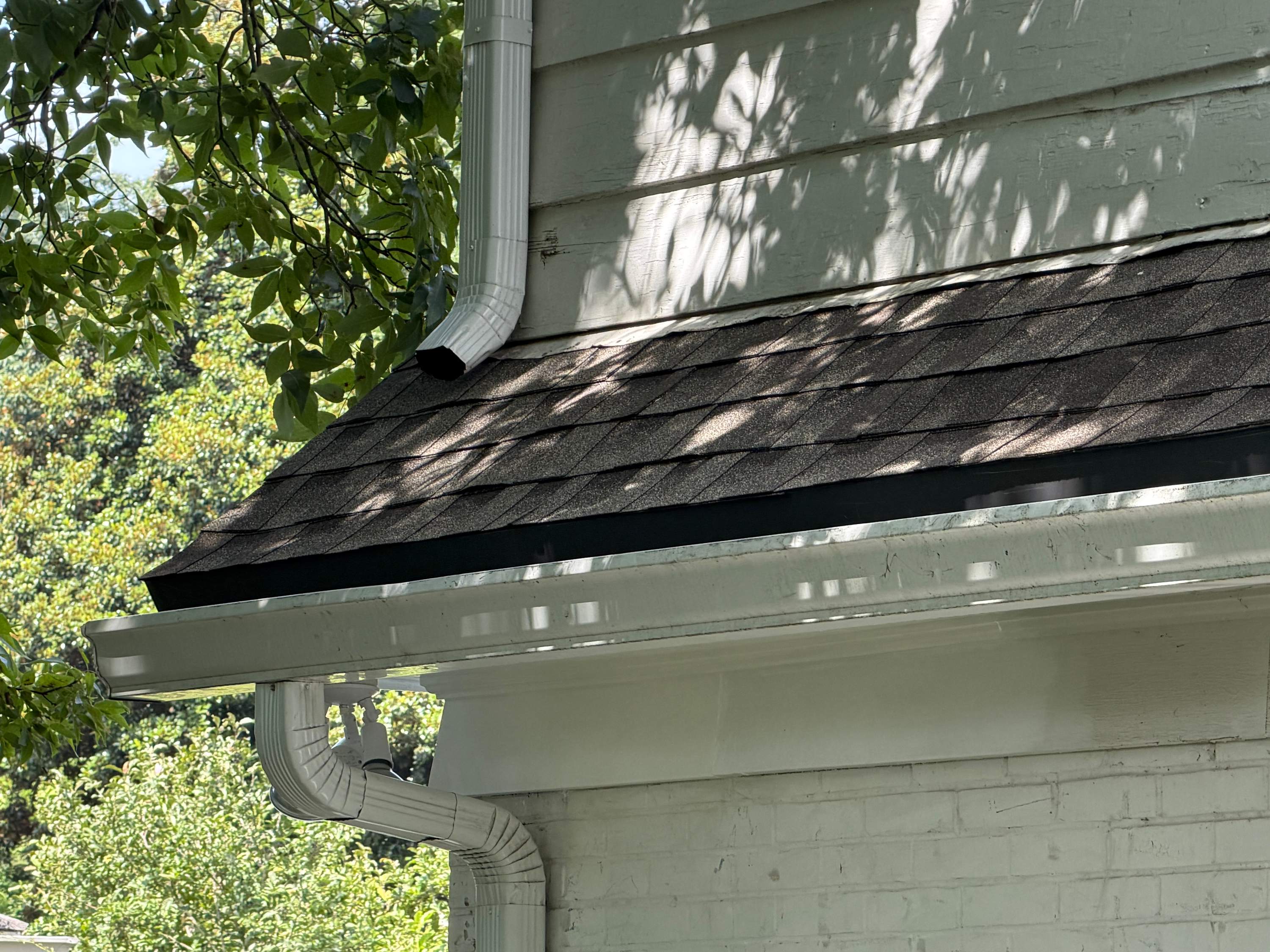
We documented this exact system-level approach during a recent eave and decking restoration in Brookwood Forest. Prior to the project, a gaping hole had compromised the dark asphalt shingles and underlying decking right along the eave line, while adjacent fascia and soffit boards showed significant rot. We rebuilt the damaged decking and secured it with a GAF StormGuard leak barrier to protect the vulnerable transition area above the white K-style gutters, then integrated fresh, color-matched shingles and painted the rebuilt timber to match the trim.
How Tree Canopies and Clogged Drainage Force Water Under Shingles
Heavy hardwood canopies trigger roof leaks by dropping leaves, acorns, and pine needles that dam up gutters and lower valleys, causing storm runoff to pool and wick upward beneath the first few courses of shingles. Shingles and slate tiles shed water flowing downhill, but they are not watertight when submerged in standing water.
During an intense thunderstorm, large volumes of water pour off a steep roof. If the gutter trough is packed with wet mid-fall leaves, that water has nowhere to go. It crests the back edge of the aluminum channel, saturates the wooden fascia board, and creeps up under the starter strip via capillary action. Once water gets past the first row of nails, it rots the lower plywood decking and drips into the soffit or exterior wall cavity.
Protecting the lower perimeter of your roof requires keeping the entire drainage pathway clear and structurally sound. When rotted fascia lets aluminum troughs pull away from the rafters, scheduling prompt gutter repair in Mountain Brook restores the proper pitch so rainwater exits through the downspouts instead of pooling against your roof edge. Below is a clear look at how storm-related leaks typically break down by scope and repair investment across the Birmingham metro.
| Repair Tier | Typical Storm Leak Scenario | Birmingham Metro Price Range | Proper Mechanical Fix |
|---|---|---|---|
| Minor Repair | Cracked pipe boot gasket or a few wind-damaged GAF shingles | $150 – $500 | Replace deteriorated rubber boot or install color-matched architectural shingles secured with proper nail placement |
| Standard Repair | Leaking valley metal, rusted chimney step flashing, or moderate leak across several shingle courses | $450 – $1,500 | Strip affected area, apply GAF waterproof leak barrier to deck, install new metal flashing, and re-shingle |
| Major Repair | Punctured roof decking from fallen oak limbs, rotted eave framing, or widespread valley failure | $1,500 – $5,000+ | Tear out saturated wood decking and fascia, rebuild structural framing, install ice-and-water shield, and match roofing material |
Most homeowners pay within the standard range when catching a flashing or valley leak early. Waiting through multiple storm cycles until the plywood deck turns spongy pushes the project into the major repair tier. If you are weighing whether a complex leak warrants a localized fix or a larger upgrade, read our analysis on comparing patch vs. replace roof repair costs in Mountain Brook.
What to Do When a Storm Leak Starts Inside Your Home
When water starts dripping through your ceiling during a storm, your immediate priority is containing the interior moisture and calling a licensed roofing crew for emergency tarping to stop further structural saturation. Climbing onto a wet, steep roof during wind and lightning is dangerous and rarely solves the underlying entry point.
We have completed hundreds of exterior projects across the Birmingham metro over the years, and we see how quickly trapped attic moisture ruins custom plaster ceilings and crown molding. Taking the right steps in the first few hours minimizes interior restoration costs:
- Relieve Ceiling Blisters Safely: If water pools above latex paint and forms a sagging bubble on the ceiling, place a bucket underneath and puncture the center of the blister with a small screwdriver so the water drains into the bucket instead of collapsing a whole sheet of drywall.
- Move Valuables and Check the Attic (If Safe): Shift furniture and rugs away from the drip. If you have safe walk-up attic access away from electrical wiring, place a heavy plastic bin under the active drip on the rafters to keep water out of the insulation.
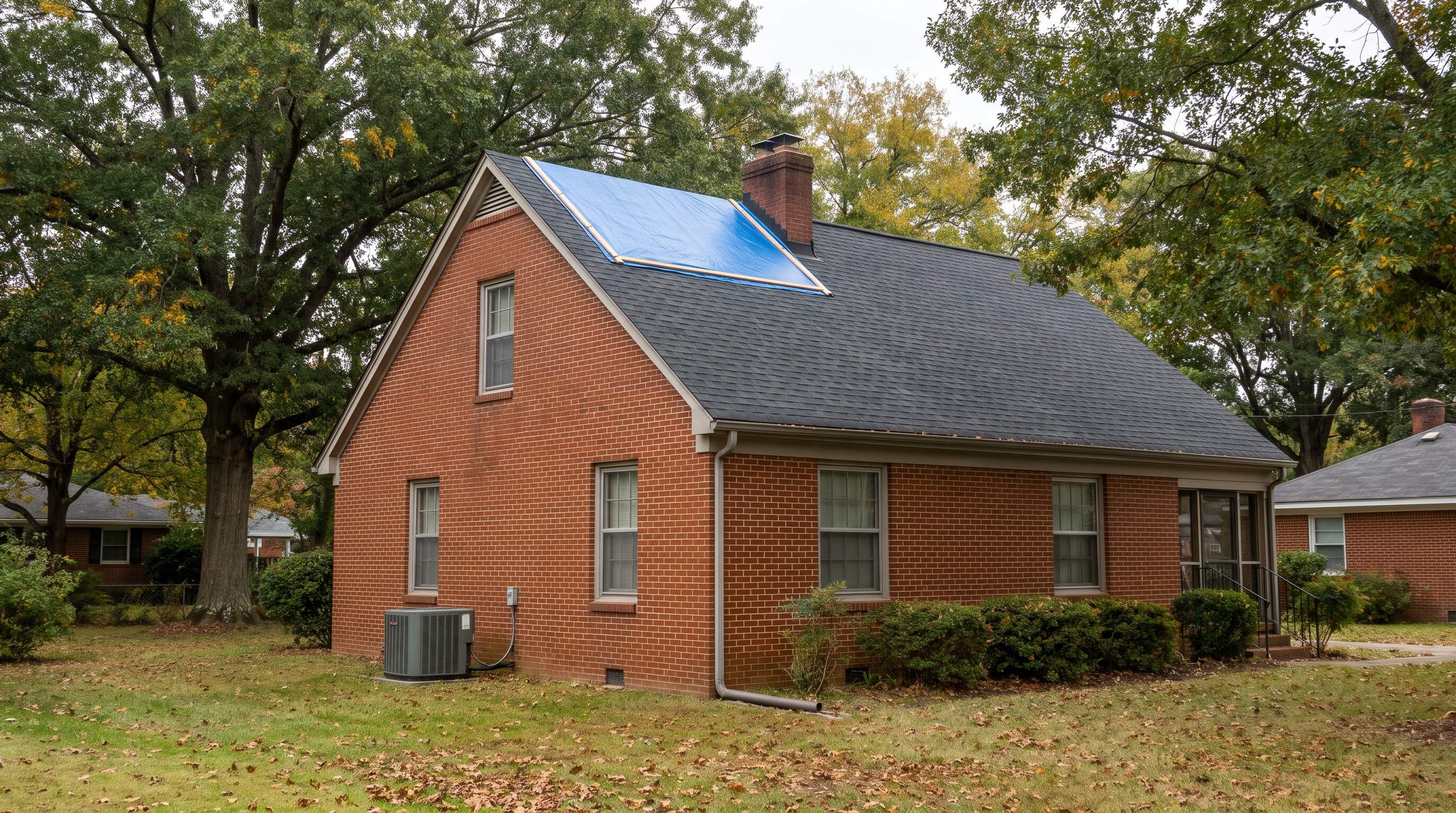
- Request Professional Emergency Tarping: A proper emergency tarp must be anchored over the ridge or tucked beneath intact shingle courses upslope from the breach; otherwise, rainwater slides right under the blue plastic. You can review our detailed protocol in what stops roof leaks fast in Mountain Brook.
- Document Everything for Potential Claims: Take clear photos of interior water stains, fallen tree limbs in the yard, and any visible exterior shingle or slate damage before cleanup begins.
When severe wind or fallen trees cause structural breaches that go beyond a localized flashing fix, our team coordinates comprehensive storm damage restoration in Mountain Brook to secure the roof deck and document the scope accurately. Keep in mind that insurance policies handle storm repairs differently: replacement cost value (RCV) policies typically cover the repair minus your deductible, whereas actual cash value (ACV) policies subtract depreciation based on your roof's age. Because some Alabama policies carry a flat dollar deductible while others use a percentage-based wind and hail deductible tied to your dwelling coverage, always check your declarations page before filing a claim for a standard repair.
Frequently Asked Questions
How much does storm roof leak repair cost in Mountain Brook?
Most homeowners pay between $150 and $500 for minor repairs like replacing a cracked pipe boot or a few wind-damaged shingles. Standard repairs involving valley flashing, chimney counter-flashing, or several shingle courses typically run $450 to $1,500, while major structural repairs requiring wood decking and fascia replacement range from $1,500 to $5,000+.
Why does my roof only leak during heavy wind-driven rain?
A roof that stays dry during light showers and leaks during heavy storms almost always has a flashing gap, a partially clogged valley, or lifted shingle seals. High winds push rainwater sideways and upward into unsealed overlaps around dormers, chimneys, and ridge vents that normal gravity-fed rain never reaches.
Can you repair a localized storm leak without replacing the whole roof?
Yes, targeted mechanical repairs add years of service life to an otherwise healthy roof. As a licensed Alabama homebuilder and certified GAF installer, we trace the leak to its true entry point, replace any rotted wood decking, install GAF waterproof underlayment, and weave in matching shingles or custom metal flashing so the repair blends seamlessly.
How fast can a crew stop an active roof leak after a storm?
Our emergency dispatch crews respond day or night across Jefferson County to tarp and secure active storm breaches before the next rain band arrives. Once the weather clears and the roof surface dries, most targeted and standard mechanical roof repairs are completed quickly depending on material matching and structural wood repairs.
Protecting Your Estate Before the Next Storm Front Arrives
Surface caulk and fresh paint along the eaves will not hold back driven rain when valley metal or chimney flashing has separated from the deck. Replacing compromised flashing and rotted wood with interlocking metal and GAF waterproof underlayment stops storm leaks at their mechanical source before interior plaster and framing suffer. Whenever you would like a straightforward assessment of your valleys, chimneys, or eaves, we are happy to arrange a thorough roof inspection in Mountain Brook at your convenience.
Ready to stop researching and get real answers?
If this article helped you spot a roofing, siding, or gutter issue, the next step is simple. Get honest guidance, a professional inspection, and a clear plan from the Patriot Roofing team.
Justin Johnson
Owner / Licensed Home Builder
Justin is the Co-Owner of Patriot Roofing & Builders and a Licensed Alabama Home Builder. With extensive experience in high-performance exterior systems and storm restoration, he brings a hands-on, technical perspective to every project across the Greater Birmingham area.
More About UsRoof Repair in Mountain Brook
You Might Also Like
Emergency Leak Mitigation in Vestavia Hills, AL