
Key Takeaways
- Iron-oxide in Central Alabama clay chemically bonds to porous paint and oxidized vinyl, turning crisp white lower siding panels a stubborn rusty orange.
- Expansive clay holds groundwater against foundation walls and lower trim, accelerating hidden moisture damage behind outdated siding materials.
- Upgrading to James Hardie fiber cement with baked-on ColorPlus finishes or installing proper ground-clearance flashing stops red dirt splashback and wood rot.
Need Siding Installation in Birmingham?
If you're looking for help in Birmingham, visit our dedicated siding installation page for local service details, project examples, and the next steps for your home.
Why Red Clay Soil Destroys White Exteriors in Jefferson & Shelby Counties
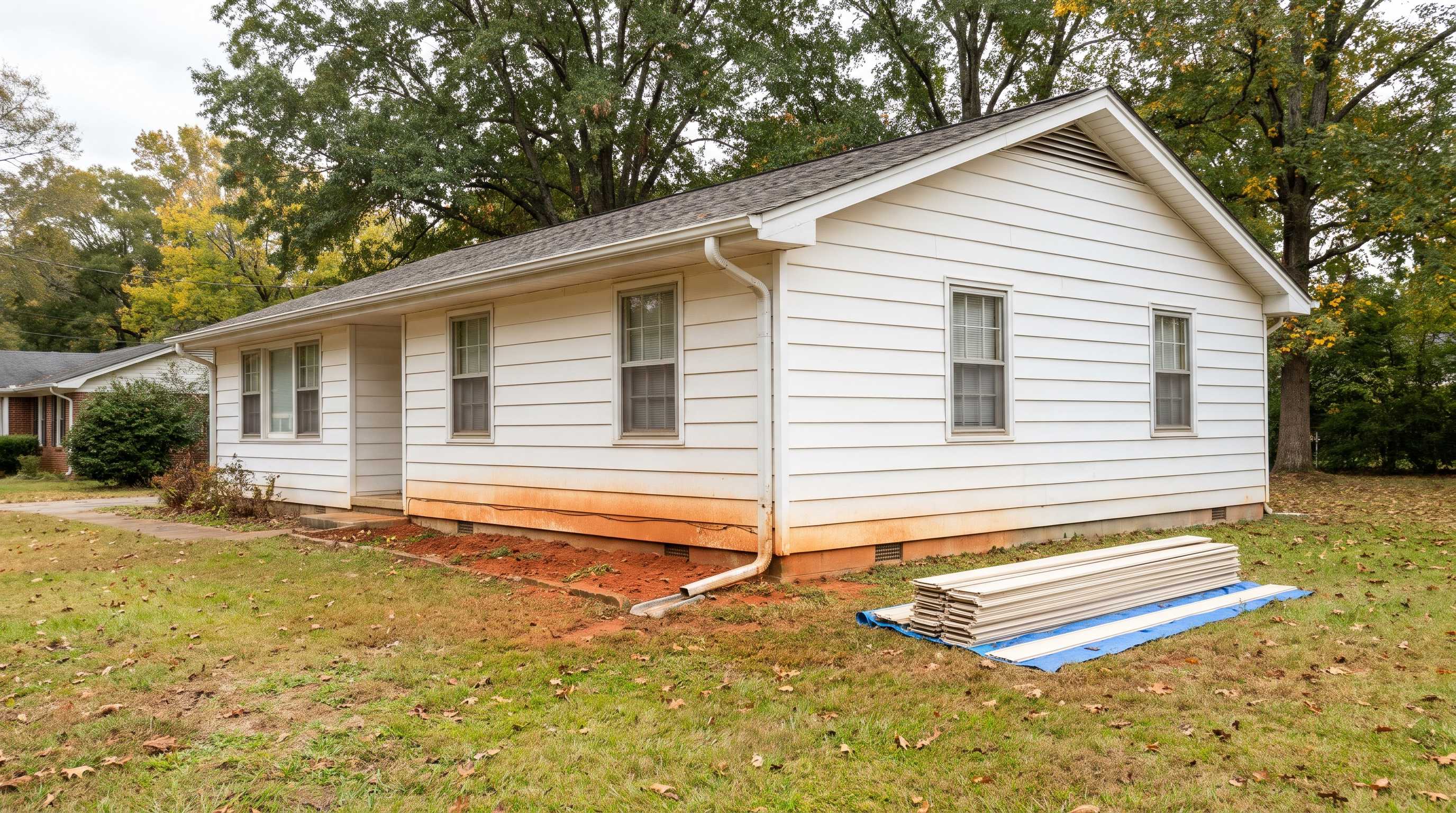
Iron-rich red clay across Central Alabama splashes onto lower exterior walls during heavy downpours, embedding microscopic mineral pigments into the pores of white cladding. When you pull into your driveway after a thunderstorm, that rusty orange band running along the bottom courses of your house is more than a cosmetic annoyance. Over time, the fine clay particles bond with oxidized paint and weathered vinyl, making simple garden hose rinsing useless.
Older neighborhoods in Birmingham feature established homes built close to the grade, where mature oak trees drop leaves that trap damp dirt right against the foundation. Whenever our siding crews pull off stained lower panels on older houses around the city, that orange dirt ring often hides a deeper drainage failure. Addressing the issue requires a combination of proper water routing, correct siding ground clearance, and residential siding contractors in Birmingham who understand how local soil interacts with building envelopes.
Beyond the surface rust stain, expansive clay soil swells when wet and holds dampness against the sill plate and bottom siding courses. Unlike sandy soil that drains rapidly, Alabama clay acts like a wet sponge pressed against your home's lower perimeter. That trapped humidity migrates upward behind outdated wood or aluminum panels, rotting the structural sheathing long before you notice peeling paint inside.
How Iron-Oxide Staining Bonds to Different Siding Materials
Porous and sun-baked exterior materials absorb the iron oxide present in red clay, creating a chemical stain that resists standard pressure washing. Not all white siding reacts the same way when pelted by muddy roof runoff. Understanding how your specific cladding handles mineral deposits helps you decide whether to clean, repair, or replace the lower wall sections.
- Builder-Grade Vinyl Siding: Cheap vinyl loses its protective titanium dioxide surface layer after years of intense Alabama sun exposure, leaving microscopic pits that trap red clay dust and turn pink.
- Painted Wood and Masonite: Aging latex paint develops hairline cracks as the wood swells and shrinks in our humid climate, allowing red mud to soak directly into the raw wood fibers underneath.
- Factory-Finished Fiber Cement: James Hardie siding with baked-on ColorPlus Technology creates a dense, non-porous barrier that sheds red dirt without absorbing the iron pigment.
Heat plays a major role in how fast vinyl degrades and starts holding onto dirt. As we explained in our guide on why heat-warped vinyl creates exterior vulnerabilities, summer sun softens thin PVC panels and opens up their surface grain. Once that factory glaze breaks down, red clay mud bakes right into the softened plastic on the sunny south and west walls of your house.
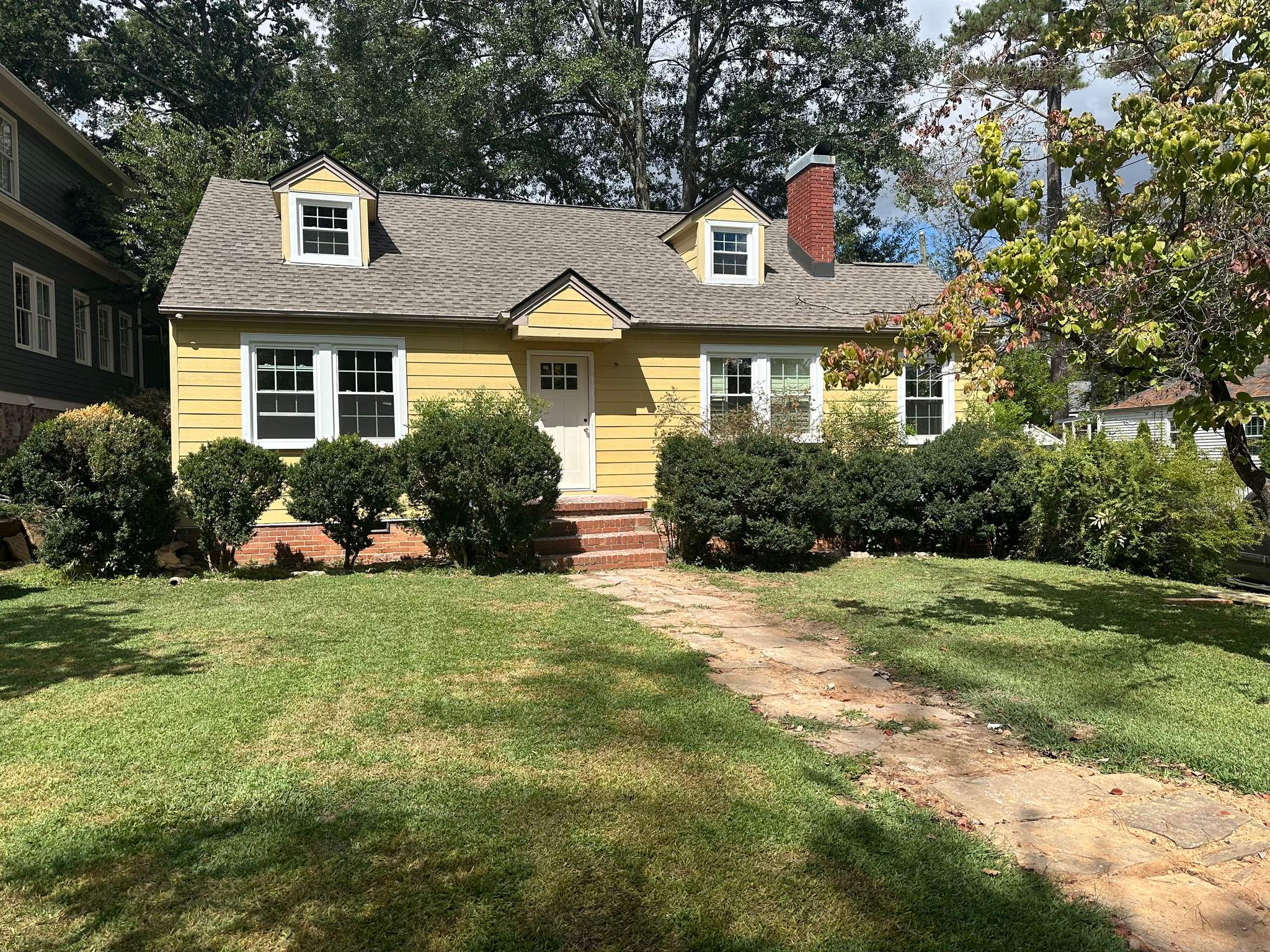
On historic homes, keeping white lap siding crisp requires moving away from field-applied latex paints that chalk and streak. During a recent roof replacement and siding installation in Birmingham's Forest Park neighborhood, white horizontal lap siding was installed along the dormers and upper walls, contrasting cleanly with dark-painted window trim and fascia. Keeping bright white profiles elevated or protected by wide eaves helps limit the constant battle against ground-level mud.
The Hidden Moisture Threat: Expansive Clay and Foundation Clearance
Installing siding too close to expansive clay soil causes the bottom boards to wick groundwater upward, rotting the wall framing and attracting subterranean termites. When soil swells during wet autumn and spring weather, it rises up to meet the bottom edge of your cladding. If the previous installer did not leave proper clearance between the dirt and the starter strip, your siding sits directly in red mud for days after every rainstorm.
Expert Field Note from Justin Johnson: On older homes across Birmingham and Hoover, we frequently pull off stained bottom courses of white wood or vinyl siding and find the OSB sheathing completely black and crumbling up to the window sills. Homeowners think they just have a dirty siding problem from gutter overflow, but the expansive clay soil has actually pushed up against the bottom trim and fed moisture straight into the wall cavity.
Trade-off number one in our market involves balancing historic curb appeal against ground clearance requirements. Many classic bungalows were built with wood siding running almost flush to the dirt or concrete patio slabs to create a grounded, traditional profile. If you replicate that low clearance today without switching to non-rot materials and installing a metal Z-flashing drip edge, the moist clay environment will ruin the new boards, forcing you to pay for the job twice.
Trade-off number two centers on how you clean clay off your walls without destroying the moisture barrier underneath. Blasting stubborn red clay stains with a high-pressure wand forces water upward behind the lap joints, soaking the house wrap and wall insulation. Because our thick Southern humidity prevents trapped wall moisture from drying out quickly, high-pressure washing trades a temporary cosmetic fix for hidden mold and structural rot.
Stopping the Splashback: Gutters, Grade, and Starter Strips
Eliminating red clay splashback requires capturing roof runoff before it hits the dirt and maintaining a strict physical gap between the soil and your bottom siding course. When rainwater pours off an un-guttered roof edge or overflows a clogged trough, it strikes the red dirt like a trenching tool, throwing mud up your white walls. Now that we are in mid-fall and oak leaves are dropping across the metro, clogged troughs turn every autumn rain into a mud-splattering event.
- Install Seamless Gutters and Downspouts: Routing roof water away from the foundation stops the heavy droplets from excavating the clay beds along your walls.
- Keep Fall Leaves Out of the Troughs: Adding gutter guards in Birmingham prevents autumn pine needles and oak leaves from damming up the system and causing muddy waterfall overflows.
- Re-establish Ground Clearance: Grade the soil back so there is a generous gap below the siding starter strip, and lay down pine straw or river rock to cushion falling rain.
- Upgrade the Drip Cap and Flashing: Install corrosion-resistant metal starter flashing that blocks ground moisture from wicking into the backside of the cladding.
When roof runoff is left unchecked for years, the damage rarely stays confined to the dirt line. Water cascading over clogged gutters rots the wooden fascia boards and seeps behind the top courses of your siding at the roofline. If your upper walls and eaves are already soft from chronic overflow, pairing your exterior wall work with roof repair in Birmingham helps the entire water-shedding system work together from peak to foundation.
Comparing Siding Materials and Repair Costs for Clay-Damaged Homes
Repairing or replacing clay-damaged white siding in the Birmingham metro ranges from $150 – $400 for a minor patch to $20,000 – $35,000 total for a full-home James Hardie fiber cement upgrade. If the red clay staining is caught early and the underlying wood sheathing is still solid, a targeted section replacement typically costs between $500 and $1,500. However, if moisture from the soil has rotted multiple wall sections or you are dealing with discontinued siding profiles, larger repairs or full replacement become the smarter financial move.
| Siding Material / Service | Typical Birmingham Cost Range | Resistance to Clay Staining & Moisture |
|---|---|---|
| Minor Vinyl Patch (Few Boards) | $150 – $400 | Low if surrounding old vinyl is porous and oxidized |
| Section Replacement | $500 – $1,500 | Moderate; restores barrier if house wrap is updated |
| Large Fiber-Cement Repair | $2,500 – $6,500 | High; includes multi-section rebuild and color match |
| Full Home Vinyl Siding ($4 – $8 / sq ft) | $8,000 – $16,000 total | Good initially; requires low-pressure washing over time |
| Full Home Engineered Wood ($7 – $12 / sq ft) | $14,000 – $24,000 total | Moderate; requires strict ground clearance above wet clay |
| Full Home Fiber Cement ($10 – $16 / sq ft) | $20,000 – $35,000 total | Superior; James Hardie resists rot, swelling, and stain bonding |
For a complete breakdown of how square footage, story height, and trim details influence your bottom line, read our companion article on the average cost of siding in Birmingham, AL. Choosing the right material upfront dictates whether you will be repainting and patching rotten boards down the road. Across our local siding replacements, James Hardie fiber cement tends to deliver a strong return on investment because the cementitious board resists rot and moisture wicking when installed above damp Alabama red dirt.
If you discover extensive sheathing decay behind your stained lower panels and need to upgrade the entire exterior rather than patching it piecemeal, our flexible financing options help you spread out the investment without settling for thin builder-grade materials. Doing the job right with premium house wrap, proper ground clearance, and factory-baked white finishes protects your framing and keeps your curb appeal bright through every rainy season.
Frequently Asked Questions
How do you remove red clay stains from white vinyl siding without damaging it?
Mix warm water with a mild dish soap or a dedicated iron-out oxalic acid cleaner, apply it with a soft-bristle brush, and rinse gently with a garden hose pointed downward. Never use a high-pressure washer set at an upward angle, nor scrub with abrasive pads, as this strips the protective UV coating off the vinyl and forces water behind the panels. If the vinyl is already chalky and oxidized, chemical cleaners will only lighten the orange stain rather than removing it completely.
When should I schedule siding repair in Birmingham, AL instead of just cleaning the walls?
You should schedule professional siding repair in Birmingham, AL as soon as you notice soft, spongy wood behind the lower panels, warped or cracked boards near the ground, or rust-colored stains that bleed back through fresh paint. While surface dirt is normal near flower beds, boards that buckle or pull away from the fasteners indicate that expansive clay moisture has penetrated the wall cavity. Replacing those compromised sections early helps prevent structural sill plate rot.
Why does James Hardie fiber cement hold up better against Alabama clay than wood or vinyl?
James Hardie fiber cement is formulated from cement, sand, and cellulose fibers, meaning it resists rot, swelling, and delamination when exposed to the heavy ground humidity trapped by Central Alabama clay. When paired with Hardie's ColorPlus Technology, the white finish is baked onto the board in multiple coats at the factory, creating a hard shell that resists iron-oxide absorption far better than porous field-applied latex paint or sun-softened vinyl.
Can replacing my gutters stop red dirt from ruining my new white siding?
Yes, installing properly sized seamless gutters with downspout extensions stops roof runoff from trenching into the dirt around your foundation and splashing mud onto your lower walls. Combining clean gutters with a layer of pine straw or gravel over the exposed red dirt greatly reduces the splash zone. This simple drainage upgrade protects both your siding's finish and your foundation's moisture barrier.
Protecting Your Birmingham Home from the Ground Up
Keeping a white house looking crisp in Central Alabama takes more than a bucket of bleach and a weekend with a pressure washer; it requires building a smart defense between our iron-rich clay soil and your exterior walls. When you walk out to your yard today and press firmly on the bottom two rows of your stained white siding, does the wall feel rock-solid, or do you hear the dry crunch of rotting wood and cracked vinyl giving way? Schedule an honest exterior inspection with Patriot Roofing & Builders to get a clear answer and a straightforward estimate for your home.
Ready to stop researching and get real answers?
If this article helped you spot a roofing, siding, or gutter issue, the next step is simple. Get honest guidance, a professional inspection, and a clear plan from the Patriot Roofing team.
Justin Johnson
Owner / Licensed Home Builder
Justin is the Co-Owner of Patriot Roofing & Builders and a Licensed Alabama Home Builder. With extensive experience in high-performance exterior systems and storm restoration, he brings a hands-on, technical perspective to every project across the Greater Birmingham area.
More About UsSiding Installation in Birmingham

You Might Also Like
Stop Ignoring How Heat Warps Vinyl in Birmingham, AL