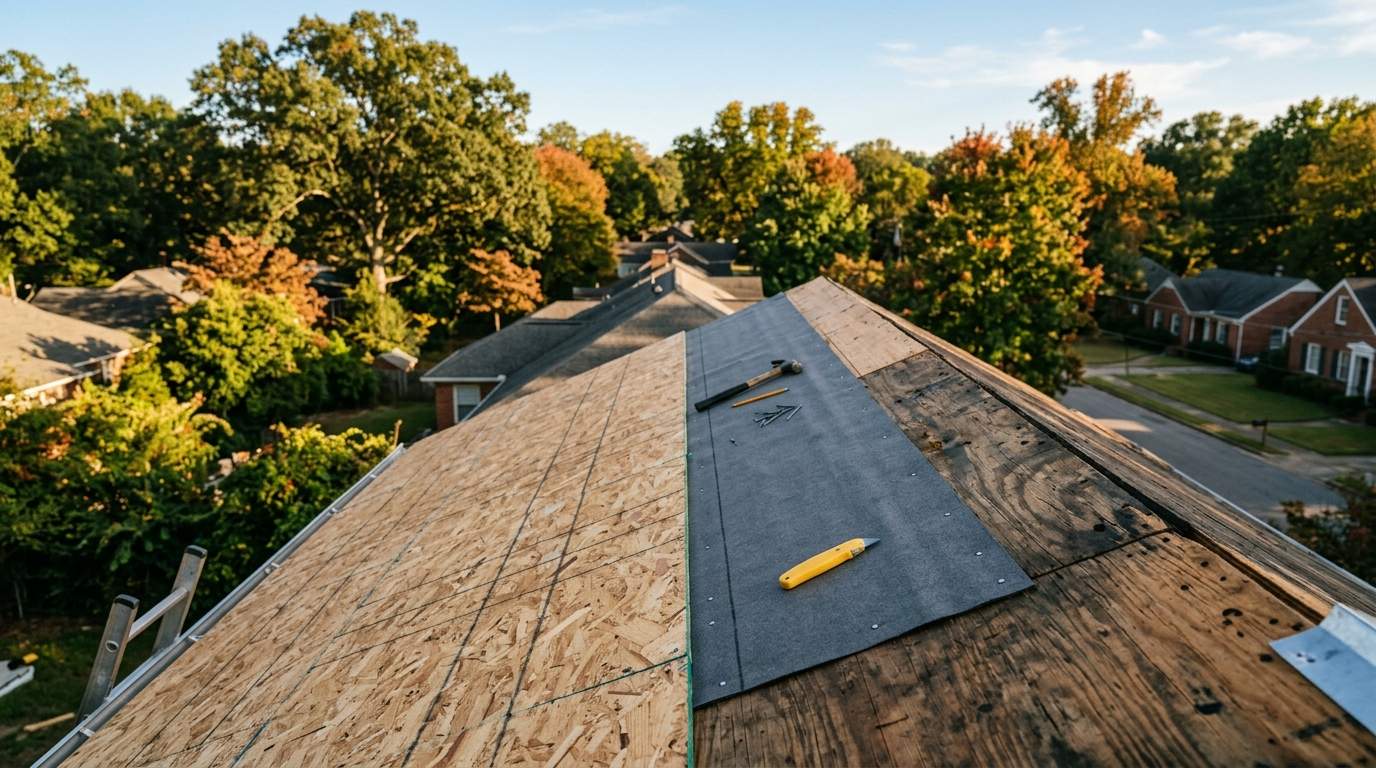

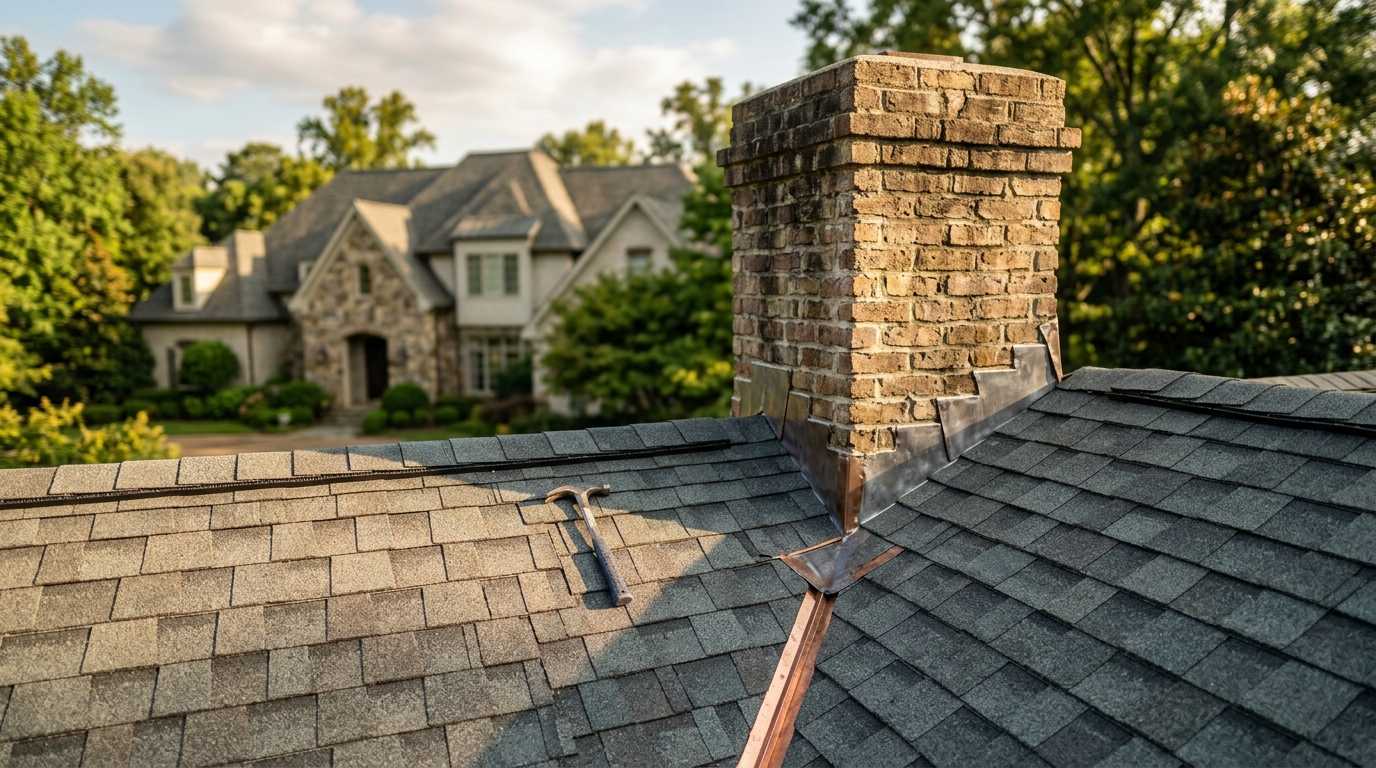
Key Takeaways
- Houses move, and roofs tell on them: Small amounts of foundation settlement show up as torn flashing, opened valleys, and cracked seals long before anything looks wrong from the street.
- Chimneys are the usual suspect: Heavy masonry chimneys settle at a different rate than the wood-framed house around them, tearing step flashing and opening a leak path you cannot see from the ground.
- Water management is roof protection: Gutters, grading, and drainage keep the soil under your foundation stable, and a stable foundation is what keeps the structure above it tight.
Need Roof Repair in Mountain Brook?
If you're looking for help in Mountain Brook, visit our dedicated roof repair page for local service details, project examples, and the next steps for your home.
The Connection Between Settling Foundations and Roof Leaks
Some of the hardest leaks to diagnose are not roofing failures at all. The shingles look fine, the last patch job was done correctly, and the water still finds its way in at the same spot every year. On houses like these, the real story is usually structural: the house has moved slightly over time, and the roof, which sits on top of everything, shows the strain first.
Mountain Brook's housing stock makes it more prone to this than most of the metro. Many homes here date from the 1920s through the 1960s, built on sloped lots with heavy masonry chimneys and, in many cases, decades of additions that settle at their own pace. Jefferson County's red clay holds moisture through wet winters and gives it up during dry late summers, and that seasonal cycle, along with mature tree roots drawing water out of the soil beside foundations, produces small amounts of uneven settlement over the years. When you need professional roof repairs in Mountain Brook, it pays to work with a team that can tell a worn-out shingle from a structural movement pattern, because the two problems have completely different fixes.
How Structural Movement Damages a Roof
Your roof framing rests on the load-bearing walls, which rest on the foundation. When one part of a foundation settles slightly relative to the rest, the framing above it racks out of square. The flexible parts of the roof system tolerate this, but the rigid parts, like metal flashing, sealant joints, and the junctions where wood framing meets masonry, take stress they were never designed to carry. It does not take dramatic movement to open a seam; a roof sheds water by millimeters.
When a structure shifts, three areas fail first:
- Roof valleys: The intersection of two roof planes concentrates twisting forces, which can buckle valley metal and tear the underlayment beneath it.
- Chimney flashing: The joint between masonry and framing moves more than any other part of the roof, and rigid flashing at that joint tears.
- Plumbing boots: Rigid pipe penetrations split or pull loose as the deck flexes around them.
Material choice matters here too. A quality architectural shingle system, like the GAF systems we install, has the tear strength to tolerate minor deck movement without cracking, which is one reason we specify them on older homes.
Why Chimneys Cause So Many of These Leaks
A masonry chimney is the heaviest thing on your roofline, and on older homes it typically stands on its own footing, separate from the foundation walls. That means the chimney and the house settle independently, and the flashing that bridges them absorbs the difference year after year.
Step flashing along brick chimneys in Mountain Brook is a repeat offender. The chimney settles at a slightly different rate than the wood-framed house around it, working the flashing seams open a little more each season and creating an invisible pathway for water.
This is why re-caulking a chimney leak rarely holds. Rigid sealant at a joint that moves will crack again on the next seasonal cycle. The durable repair is mechanical: multi-piece, overlapping flashing that can flex with the joint instead of fighting it.
Signs the Problem Is Movement, Not Shingles
The telltale pattern is a leak that reappears at the first heavy rain after a long dry spell. During a drought, soil moisture drops, minor settlement opens joints that the wet season had held closed, and the next storm finds the gap. If a leak keeps returning to the same spot after competent patching, stop patching and start looking at the structure. Other indicators to check:
- Hairline cracks in interior drywall radiating from the corners of upper-story windows or doors.
- Doors or windows that stick or refuse to latch in late summer but behave in winter.
- A visible gap opening between chimney masonry and the adjacent siding or trim.
- Cracked or buckled shingles running in a straight line along a roof deck seam.
If you are already planning exterior work such as a siding installation in Mountain Brook, that is an ideal time to have the underlying framing checked for movement while it is exposed.
What These Repairs Cost
Caulk on a moving seam is a temporary fix. Repairs that last on a shifting structure are mechanical, built to tolerate small movements without breaking the water seal. Flexible flashing work at chimneys and valleys typically runs $450 to $1,500, with structural decking work above that. For the full repair tier breakdown, and the replacement pricing to weigh it against, see our patch-or-replace cost guide for Mountain Brook.
If movement has damaged multiple slopes, a full roof replacement with upgraded underlayment can be the more cost-effective path than repairing section by section. Our roofing cost calculator gives a quick starting estimate.
Protecting the Roof by Protecting the Foundation
The cheapest structural roof repair is the one you prevent. Keeping the soil around your foundation at a reasonably consistent moisture level takes the drama out of the seasonal cycle, and most of that comes down to managing water.
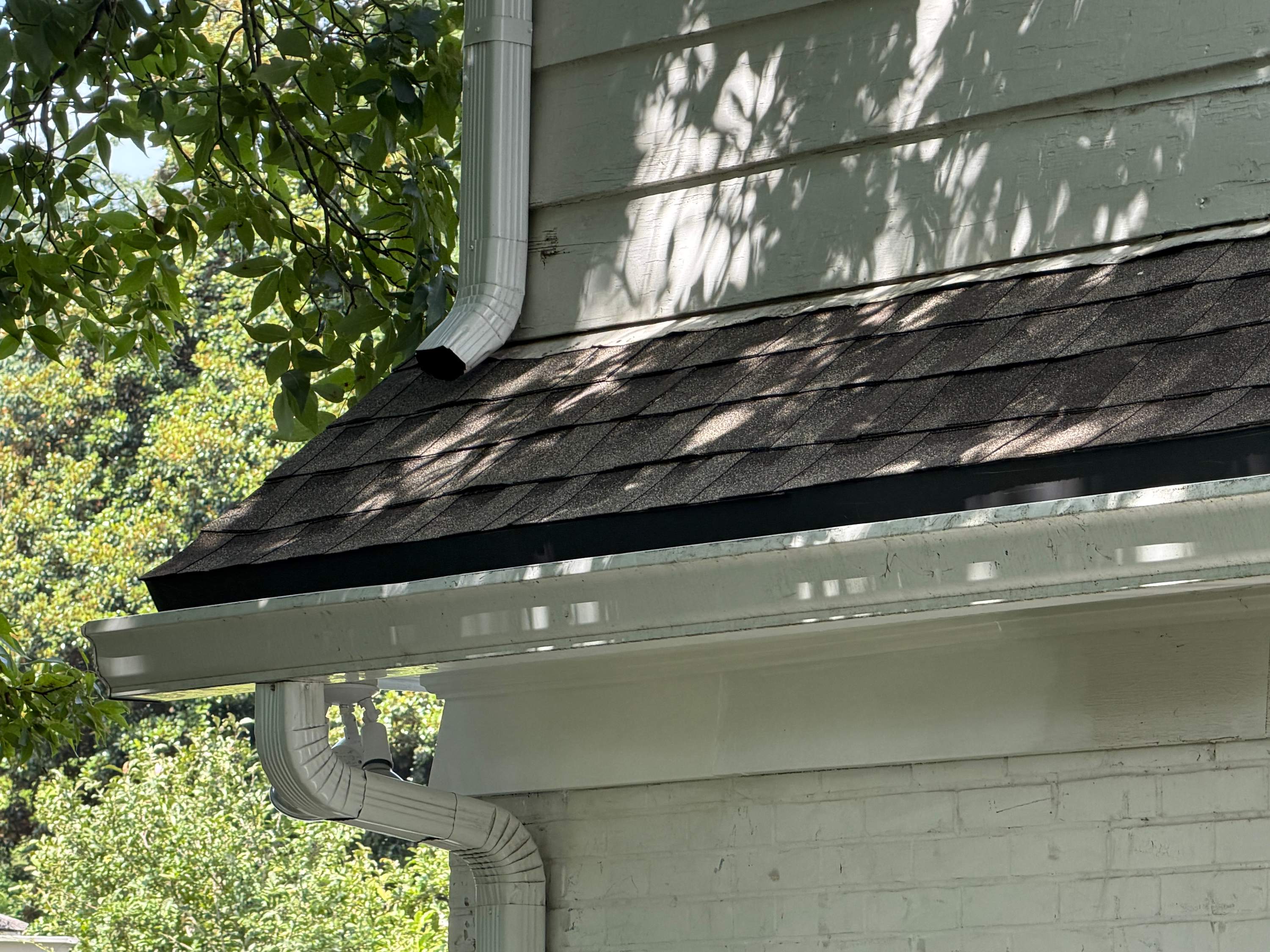
Gutters do more of this work than most homeowners realize. A clogged or leaking gutter dumps concentrated roof runoff right beside the foundation, soaking the clay on one side of the house while the other side stays dry, which is exactly the uneven condition that drives differential settlement. Professional gutter repair in Mountain Brook is foundation protection as much as it is roof-edge protection. We have seen where neglected drainage leads; our fascia repair project in Mountain Brook shows the kind of rot that uncontrolled overflow causes at the roof edge. Beyond gutters: keep grading sloped away from the house, and on steep lots where soil is creeping, an engineered retaining wall in Mountain Brook can stabilize the slope, though that is a site-specific call, not a universal fix.
Frequently Asked Questions
Can foundation settlement really cause a roof leak?
Yes. Roof framing rests on the walls and foundation below it, so uneven settlement racks the framing and stresses the rigid parts of the roof system. Flashing at chimneys and valleys tears first, because those junctions concentrate the movement.
How do I know if a leak is from movement rather than worn shingles?
The classic pattern is a leak that returns to the same spot after proper repairs, especially at the first heavy rain following a dry spell. Hairline drywall cracks upstairs, doors that stick in late summer, or a gap opening beside the chimney all point to movement rather than shingle wear.
What does it cost to repair movement-related roof damage in Mountain Brook?
Flexible flashing repairs at chimneys and valleys typically run $450 to $1,500. If decking or framing connections need attention, expect $1,500 to $5,000 or more depending on scope. A structural inspection settles the question before any money is spent.
Do retaining walls or drainage improvements protect the roof?
Indirectly, yes. Anything that keeps foundation soil moisture stable, with gutters and grading doing the heavy lifting, reduces the settlement that stresses the roof. On sloped lots, an engineered retaining wall can be part of that picture where the site calls for it.
Get the Right Diagnosis First
A recurring leak on a settling house cannot be fixed from the top down. Our certified roof inspectors look at the whole system, from the drywall cracks inside to the flashing seams outside, and tell you plainly whether you need a $500 flashing repair or something more structural. If you have a leak that keeps coming back, or you have spotted fresh hairline cracks upstairs, schedule an inspection before the next storm season finds the gap first.
Ready to stop researching and get real answers?
If this article helped you spot a roofing, siding, or gutter issue, the next step is simple. Get honest guidance, a professional inspection, and a clear plan from the Patriot Roofing team.
Justin Johnson
Owner / Licensed Home Builder
Justin is the Co-Owner of Patriot Roofing & Builders and a Licensed Alabama Home Builder. With extensive experience in high-performance exterior systems and storm restoration, he brings a hands-on, technical perspective to every project across the Greater Birmingham area.
More About UsRoof Repair in Mountain Brook
You Might Also Like

Avoid Hidden Roof Repair Fees in Vestavia Hills, AL