
Key Takeaways
- High summer humidity and heat soften asphalt shingles, allowing bruised fiberglass mats to stay flat and seal temporarily over hail fractures.
- Airborne moisture feeds dark algae streaks that camouflage missing granules from ground-level inspections and quick adjuster walk-throughs.
- Cooler late-fall air causes moisture-swollen roof decking and stiffened shingles to contract, turning hidden spring hail bruises into active winter leaks.
Need Storm Damage Restoration in Birmingham?
If you're looking for help in Birmingham, visit our dedicated storm damage restoration page for local service details, project examples, and the next steps for your home.
How Moist Air Masks Roof Impacts Across Jefferson and Shelby Counties
Yellow water rings on a hallway ceiling often show up in late autumn, months after the noisy spring squalls have passed. A homeowner usually wipes the spot with bleach or sets a bucket in the attic, assuming a nail popped or a pipe sweated during the summer. When our crew climbs up to inspect the slopes, we find dozens of soft, spongy pockets where hailstones crushed the fiberglass mat months earlier. High summer humidity and intense heat kept the asphalt pliable enough to hold out water temporarily, only for the fractured tabs to crack open once cooler fall air stiffened the roof. Understanding how moisture disguises storm damage restoration in Birmingham helps you catch compromised shingles before the insurance filing window closes.
Why Warm, Humid Air Delays Hail Leaks on Asphalt Shingles
Heavy moisture and summer heat keep fractured asphalt soft and swollen, allowing bruised shingles to seal over microscopic cracks for months after a hailstorm. When hail hits an asphalt roof during a muggy spring storm, the ice stone drives ceramic granules straight down into the fiberglass backing. In a dry climate, that shattered mat splits open and leaks during the very next rain. Around Central Alabama, baking sun and sticky air turn the petroleum-based asphalt into a putty-like binder that temporarily bridges those tiny tears.
Beneath the shingles, your wood roof decking reacts to the exact same muggy air. Oriental strand board and plywood absorb ambient moisture from humid attic spaces and minor underlayment weeps, causing the wood fibers to swell tight around roofing nails. That swelling pinches off slow drips all through July and August. Once late fall brings crisp, dry air into the region, the wood shrinks back down and the cooled asphalt loses its flexibility. Those hidden hail fractures snap open under the thermal contraction, which is why so many families end up searching for roof repair in Birmingham right before the winter freezes arrive.
Visual Camouflage: Algae Streaks and Swollen Decking
Thick humidity feeds dark airborne algae and traps damp tree debris on roof slopes, creating dark stains that blend right in with missing shingle granules. When hail knocks the protective stone coating off a shingle, it leaves behind a dime-to-quarter-sized black spot of exposed asphalt. On a clean, dry roof, those fresh black divots stand out against gray, brown, or weathered wood tones. In our older, tree-lined neighborhoods across Birmingham, airborne algae thrives in the muggy air and coats north-facing and shaded slopes in a dark, streaky film.
That organic growth acts as natural camouflage over storm bruising. An untrained eye or a rushed insurance adjuster looking from a ladder will often write off dark hail spots as routine mildew or age-related staining. While we covered the physical markers of impact in our breakdown of five signs of hidden hail damage, humidity adds an extra layer of deception that requires hands-on testing to uncover.
- Algae-darkened divots: Blackened algae colonies fill in the shallow craters left by hailstones, hiding the exposed asphalt mat from camera lenses.
- Caked pine needles and oak leaves: Damp organic litter sticks to rough, bruised shingle edges in the valleys, concealing punctured underlayment.
- Swollen ridge vents: High attic humidity warps plastic ridge vents, making physical hail dents look like normal heat blistering.
- Oxidized metal flashing: Muggy air accelerates surface chalking on aluminum vents and chimney flashing, dulling the shiny silver marks that fresh hail usually leaves behind.
Expert Field Note from Justin Johnson: On mature, shaded homes across Jefferson and Shelby Counties, we never trust a visual scan from the eaves. You have to walk the slope and press your thumb directly into the dark spots; healthy asphalt under algae feels solid as a rock, while a humidity-masked hail bruise gives way like the skin of an overripe peach.
How Humidity Impacts Different Roofing Materials After a Storm
Every exterior material reacts differently when hail impact combines with Central Alabama's damp climate, changing both how damage hides and how long the roof lasts. Standard three-tab shingles have the thinnest fiberglass mat and lose their water-shedding capability fastest once moisture works into a bruise. Architectural GAF shingles feature a thicker, laminated dual-layer build that resists immediate tearing, though trapped moisture inside a crushed pocket will still rot the underlying mat over a single season. Metal panels do not absorb water, so humidity cannot soften or hide a dent, though damp leaves sitting in a hail crease will speed up protective coating wear.
| Roofing Material | How Humidity Hides Hail Impact | Long-Term Moisture Risk |
|---|---|---|
| 3-Tab Asphalt Shingles | Algae streaks blend directly with exposed black asphalt spots | Rapid mat rot and tab blow-off during fall windstorms |
| GAF Architectural Shingles | Softened sealant strips hold bruised layers flat through summer | Slow granule shedding and hidden underlayment decay |
| Standing Seam Metal | Morning condensation and tree sap dull fresh dent reflections | Coating micro-fractures can rust if wet debris sits in dents |
| Modified Bitumen (Flat) | Ponding water and surface moss cover crushed granule pockets | Blistering and seam separation during winter freeze-thaw cycles |
If your home has a low-slope porch transition or rear addition, moisture plays an even bigger trick on flat membranes. Working with experienced flat roofing contractors in Birmingham ensures those soft, water-logged blisters get tested alongside your main shingle slopes.
Why Late Fall Is the Critical Window for a Hail Audit
Scheduling an inspection in late fall lets a contractor spot thermal cracking before winter rains freeze inside the bruised shingles and rot the wood decking. Once overnight temperatures drop, the cycle of daytime sun and chilly nights pulls apart the temporary asphalt seals that held together all summer. Water seeps into the fractured mat, freezes, and expands like a wedge, prying the shingle layers apart and pushing moisture past the nail shanks.
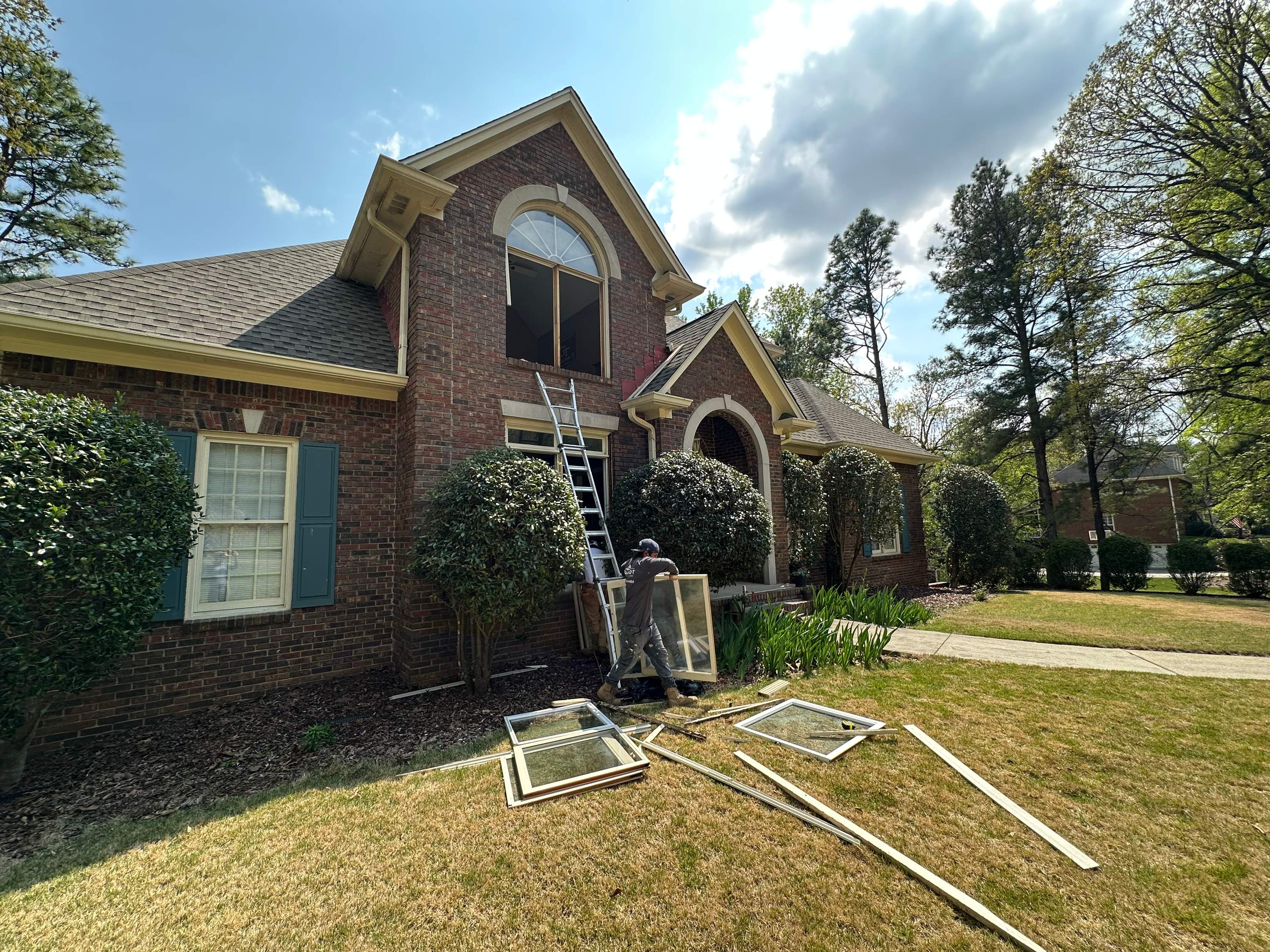
Waiting until spring to check a roof that took hail earlier in the year also puts your insurance claim in jeopardy. Most carriers enforce strict filing deadlines following a recorded storm date, and adjusters frequently blame delayed damage on wear and tear if green moss or wood rot has already set into the hail bruises. Our crews have finished dozens of exterior projects across the greater Birmingham area in just the last few months, and we consistently see policies cover full restorations when the bruising is documented before secondary rot takes over. For instance, our team completed a storm damage roof replacement in Glen Iris where weathered shingles were upgraded to multi-toned gray architectural shingles with fresh dark chimney flashing and clean white gutters.
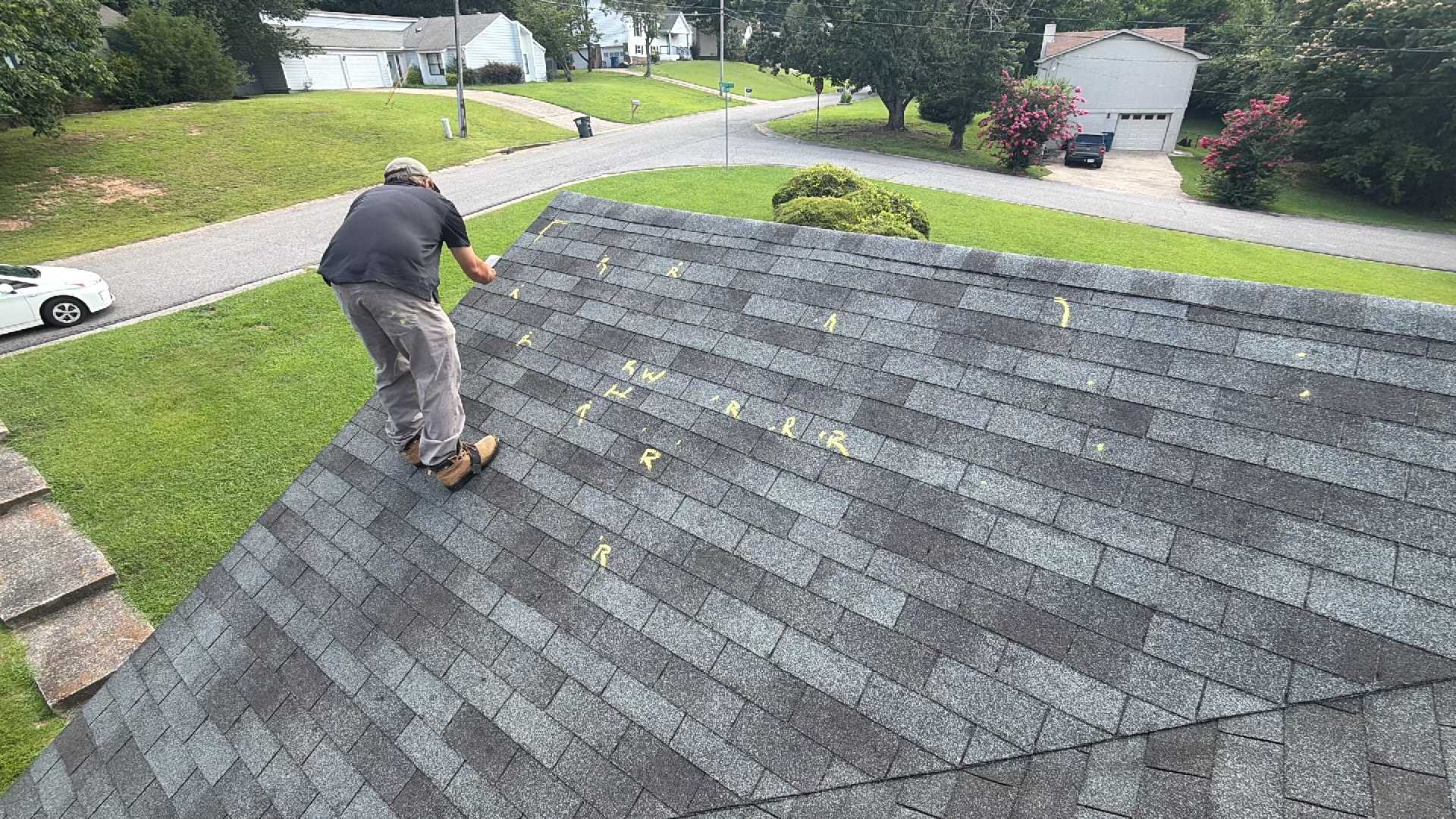
Having certified roof inspectors document the chalk outlines of dented vents and soft shingle bruises gives your adjuster clear proof that wind and ice caused the failure, not age. You can read more about how storm roof insurance claims work to see what documentation adjusters require before approving a scope of work.
What a Complete Moisture and Hail Inspection Covers
A thorough storm audit checks the structural decking, attic ventilation, and exterior drainage alongside the shingle surface to catch every piece of hidden water intrusion. Because Patriot Roofing & Builders is a Licensed Home Builder and GAF Certified Plus contractor, we look past the top layer of granules to evaluate how the entire structural envelope is handling the humidity. We have completed hundreds of exterior projects across the Birmingham metro over the years, giving our team a sharp eye for the spots where moisture and storm damage intersect.
- Soft-spot tactile grid testing: We walk each roof facet to feel for crushed fiberglass mats hidden beneath dark algae streaks.
- Collateral metal chalking: We rub sidewalk chalk across box vents, valley flashing, and gutter aprons to highlight shallow hail dings dulled by oxidation.
- Attic decking and truss audit: We check the underside of the roof deck for dark moisture halos around nail tips and rusted truss plates.
- Drainage and eave evaluation: We inspect downspouts and trough seams for granule buildup, often installing gutter guards in Birmingham during restorations so wet fall leaves cannot trap water against the fascia.
When more than a quarter to a third of a roof slope shows bruising, patching individual tabs rarely holds up because the surrounding brittle or moisture-swollen shingles tear when pried up. Moving forward with a complete roof replacement in Birmingham allows us to strip the wet underlayment, replace any soft wood decking, and install a sealed system rated for severe Alabama weather.
Frequently Asked Questions
How much does hail damage roof repair cost out of pocket in Birmingham?
When a storm totals your roof and triggers an insurance claim, most homeowners pay a typical out-of-pocket deductible ranging from $3,000 to $8,000, which is often calculated as a percentage of your home's dwelling limit. Some policies carry a flat deductible instead, and whether you owe more than the deductible depends on if you have a replacement cost value (RCV) policy or an actual cash value (ACV) policy that subtracts depreciation. Check your policy declarations page for your exact deductible, and keep in mind that we offer flexible financing options to help families manage their out-of-pocket share comfortably.
Can high humidity cause shingles to blister and look like hail damage?
Yes, poorly ventilated attics trap hot, humid air against the underside of the roof deck, overheating the shingles and causing trapped moisture to pop out as surface blisters. Unlike hail damage, which dents the shingle inward and embeds granules into the mat, heat blisters form raised bubbles with sharp edges and leave no dents on nearby metal vents. Experienced hail damage roofers check your metal flashing and attic airflow to separate manufacturing blisters from true storm impacts before you file a claim.
How long after a hailstorm can humidity hide a roof leak?
Summer heat and humidity can keep a bruised shingle sealed for four to eight months after a spring hailstorm. The leak usually stays hidden inside the swollen wood decking or attic insulation until late-fall temperature swings shrink the materials and heavy winter rains push water through the ceiling drywall.
Why did my insurance adjuster miss hail damage on my shaded roof slopes?
Adjusters who rely on drone photos or quick visual scans often miss hail bruises on shaded slopes because humidity-fed black algae and damp leaf stains hide the missing granules. Having a licensed contractor meet the adjuster on the roof to physically feel the soft spots and chalk the metal vents ensures those camouflaged impacts get included in the scope of loss.
Protecting Your Home Before Winter Freezes Arrive
Ignoring minor hail indentations through the cooling season allows moisture to penetrate the compromised shingle mats, eventually leading to expensive interior water damage and costly structural decay that insurance may no longer cover. Request a professional roof damage assessment to verify your home’s condition and secure the necessary documentation for your claim.
Ready to stop researching and get real answers?
If this article helped you spot a roofing, siding, or gutter issue, the next step is simple. Get honest guidance, a professional inspection, and a clear plan from the Patriot Roofing team.
Justin Johnson
Owner / Licensed Home Builder
Justin is the Co-Owner of Patriot Roofing & Builders and a Licensed Alabama Home Builder. With extensive experience in high-performance exterior systems and storm restoration, he brings a hands-on, technical perspective to every project across the Greater Birmingham area.
More About UsStorm Damage Restoration in Birmingham

You Might Also Like

5 Signs of Hidden Hail Damage in Birmingham, AL