Key Takeaways
- Drone technology offers safety on steep rooflines while providing sharp aerial imagery of widespread granule loss.
- Manual walk-on assessments let inspectors physically touch damaged shingles to verify fractured backing mats and soft spots that high-resolution optics miss.
- A thorough assessment strategy often combines both tools to satisfy strict insurance documentation requirements in Jefferson and Shelby Counties.
Need Roof Inspection in Birmingham?
If you're looking for help in Birmingham, visit our dedicated roof inspection page for local service details, project examples, and the next steps for your home.
Assessing Hail Storm Consequences Across Jefferson and Shelby Counties
Determining whether a high-definition drone or a physical walk-on evaluation works best for hail damage comes down to balancing inspector safety against tactile diagnostic depth. In Central Alabama, hail impacts frequently bruise asphalt shingle foundations without immediately tearing the top layer of granules. Identifying this latent structural damage before seasonal rainfall leads to hidden deck rot requires selecting the right diagnostic approach.
Properties situated along elevated terrain in neighborhoods like Vestavia Hills and Mountain Brook present steep slopes that complicate physical foot traffic. While aerial cameras easily photograph wide sections of architectural GAF shingles, cameras cannot press down on a subtle dark mark to confirm whether the internal waterproofing sheet has fractured. Understanding these exact trade-offs helps homeowners choose the right approach for a roof inspection in Birmingham after severe weather.
High-Definition Drones vs. Hands-On Physical Inspections
Drone roof assessments utilize specialized camera platforms to capture high-resolution imagery from safe operating heights, while physical inspections involve a trained technician walking the surface to evaluate component flexibility and adhesion. Drones excel at scanning massive roof areas quickly, mapping ridge caps, and spotting missing shingles across steep gables without stepping foot on fragile surfaces. For specialized aerial or infrared diagnostic scans, most homeowners pay $400 – $600.
Conversely, manual walk-on evaluations allow inspectors to physically lift shingle edges, test pipe boot elasticity, and feel for soft wood decking beneath the underlayment. Basic visual checks are typically free when paired with a repair estimate, whereas a dedicated walk-on assessment with a written condition report generally costs $150 – $300. Drones deliver broad surface clarity, but physical evaluations reveal structural vulnerabilities hidden beneath surface debris.
| Assessment Criteria | Drone Aerial Camera Inspection | Manual Walk-On Physical Inspection |
|---|---|---|
| Inspection Cost Range | Most homeowners pay $400 – $600 | Typically free with estimate; $150 – $300 for standalone report |
| Safety on Steep Pitches | High safety; no physical foot traffic required | Requires safety harnesses and staging equipment |
| Tactile Bruise Detection | Limited to visual color changes | High; physical pressure confirms mat fractures |
| Valley & Debris Clearance | Blocked by pine needles and leaf buildup | High; debris cleared by hand during evaluation |
| Insurance Claim Documentation | Great for overall scope and ridge counts | Essential for test square chalking and tactile photos |
Diagnostic Limitations: What Cameras Miss During Hail Evaluation
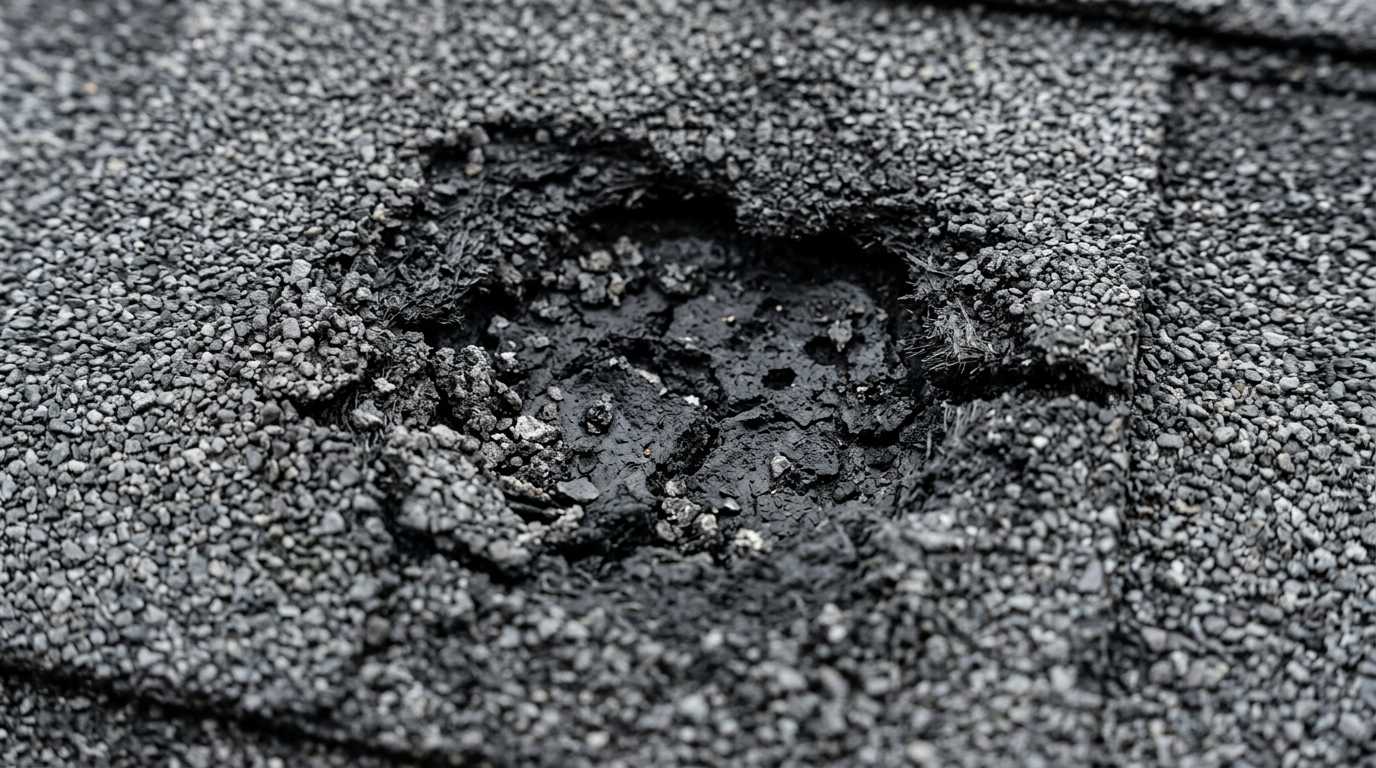
High-resolution cameras often fail to detect latent hail damage because hail impact bruises the internal fiberglass mat without leaving immediate visual scars on the granule surface. When intense summer heat bakes shingles across Central Alabama, the underlying asphalt binder softens. Hailstones striking softened asphalt create subtle fractures underneath the surface layer that remain invisible from high aerial altitudes.
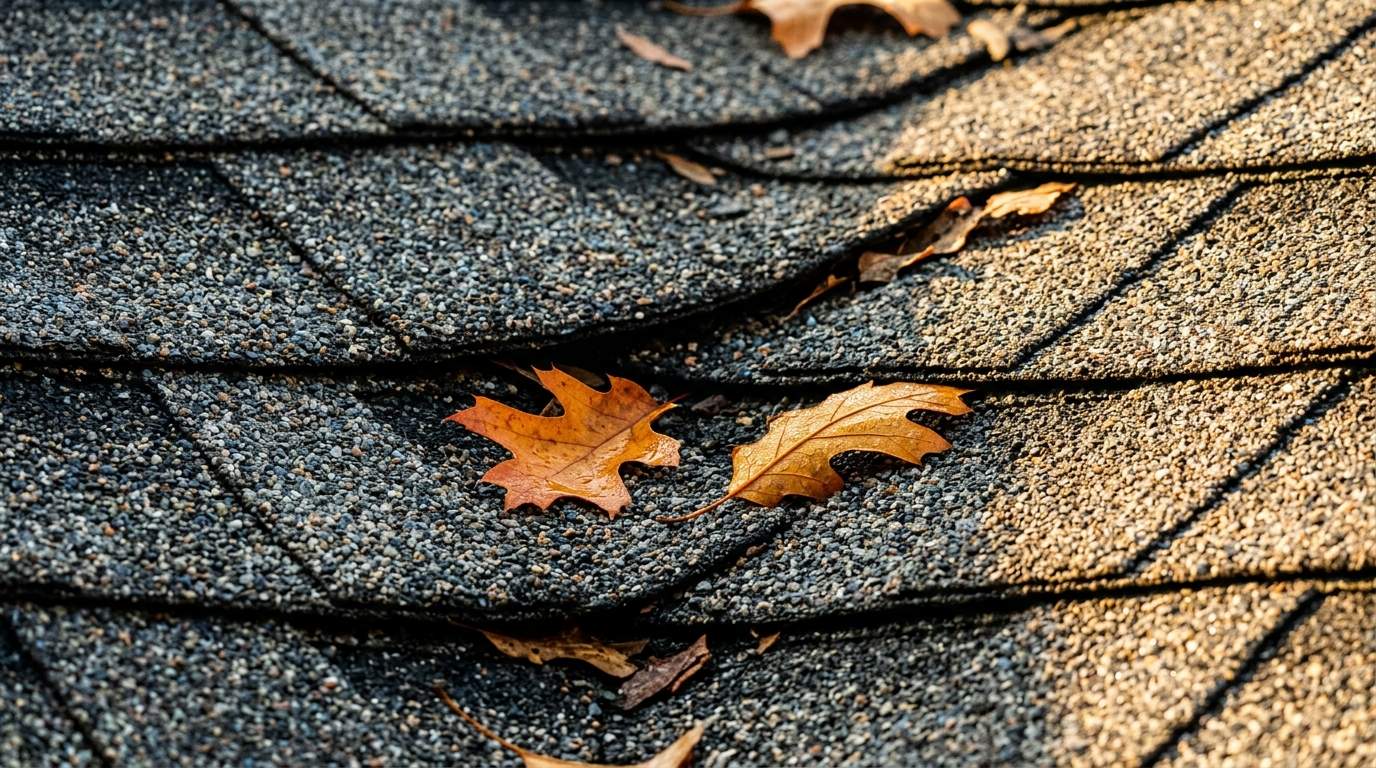
Dense tree shade in established historic communities like Forest Park and Highland Park constantly deposits pine needles and leaf pack into valleys and step flashings. Overhead cameras cannot see through organic accumulation. A manual inspector physically clears debris from transition seams, inspects chimney flashing, and checks for water intrusion near valley lines. Catching these hidden flaws early avoids requiring extensive roof repair in Birmingham later.
- Tactile Bruise Testing: Pressing fingers into suspected hail strikes to feel for soft, crushed fiberglass matting beneath intact granules.
- Valley Debris Removal: Clearing pine needle buildup by hand to inspect underlying metal valley linings and seam seals.
- Flashing Adhesion Checks: Physically lifting shingle courses near wall step flashings to test remaining sealant bond.
Safety Considerations vs. Tactile Accuracy on Complex Rooflines
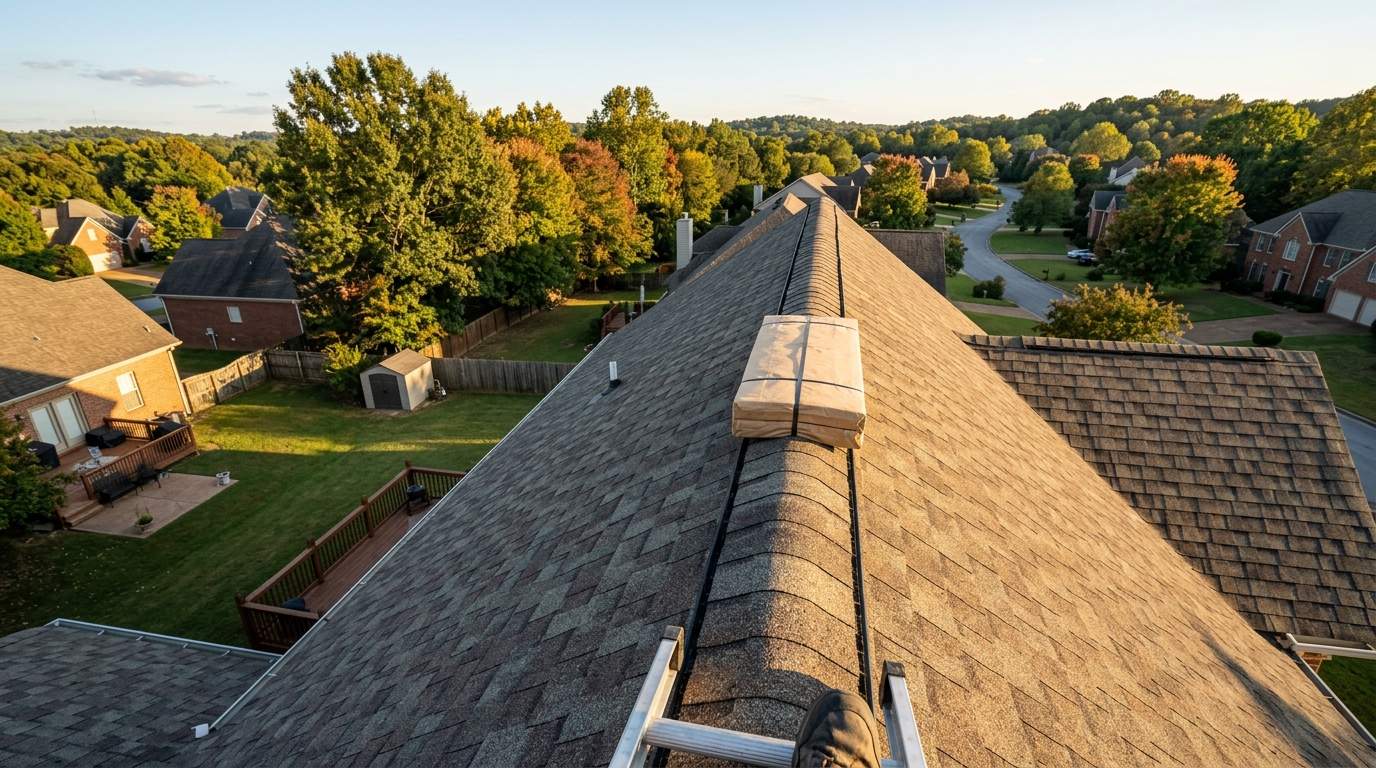
Navigating steep roof pitches and complex multi-gable designs presents genuine safety hazards that make drone technology an excellent option for preliminary visual sweeps. High-pitched architectural styles require full safety rigging, which can scuff hot, pliable asphalt shingles during warm summer afternoons. Using a drone eliminates personal risk while providing complete aerial photographic evidence of hard-to-reach valleys and elevated dormers.
Expert Field Note from Justin Johnson: On steep multi-story homes around Vestavia Hills, a drone gives us an immediate full-roof picture without scuffing hot shingles on a warm afternoon. But whenever a storm brings hail, we still get boots on the deck to chalk off a test square, because insurance adjusters want physical indentation photos before approving a claim.
Insurance Claim Requirements in Central Alabama
Filing a successful hail claim with your insurance provider requires clear proof of functional damage captured within standardized test areas. Insurance adjusters typically require a physical count of hail strikes inside a ten-by-ten foot chalked test square on each directional slope of your home. While aerial drone imagery helps show the overall scope of a severe weather event, adjusters rely heavily on close-up photos of chalked physical indentations to justify a full reroof.
Relying purely on aerial photos can risk claim denials if an adjuster misinterprets dark hail bruises as heat blistering or simple granule wear. Combining high-resolution flight paths with hands-on chalk testing gives homeowners complete documentation. If you suspect your home sustained storm damage, scheduling professional storm damage restoration services ensures all physical and visual evidence is collected properly.
The Long-Term ROI of Thorough Inspection Methods
Choosing an inspection strategy that balances broad aerial photos with detailed physical checking yields a high return on investment by preventing minor, undetected water intrusion from rotting structural decking. Unaddressed hail impact fractures allow moisture to seep into wood substrates. In Central Alabama, heavy humidity accelerates wood decay and weakens roof decking from the underside.
Spotting small seal failures early saves thousands of dollars compared to replacing saturated decking during a full system overhaul. If an inspection reveals widespread mat degradation beyond simple repair, planning a full roof replacement in Birmingham restores structural integrity before leaks ruin interior ceilings.
- Preventative Leak Detection: Catching cracked pipe boots and loose flashing before water penetrates attic insulation.
- Claim Documentation Precision: Providing adjusters with chalked test square photos alongside drone imagery to speed up approvals.
- Preserving Material Lifespan: Identifying heat blistering versus genuine hail impacts to prevent filing frivolous claims that raise insurance rates.
Frequently Asked Questions
Can a drone detect hail damage as accurately as a manual roof inspection?
Drones excel at spotting broad visual damage like missing shingles and dislodged ridge caps, but they cannot feel for soft spots or underlying fiberglass mat fractures. A manual inspection remains superior for physical tactile testing, while drones offer safer coverage on steep or hard-to-reach roofs.
How much does a professional roof inspection cost in Birmingham, AL?
A basic visual roof evaluation typically ranges from $75 – $200, though contractors often provide this free alongside a repair estimate or storm claim. Comprehensive walk-on reports usually cost $150 – $300, while specialized drone or thermal imaging generally runs $400 – $600.
Will my insurance carrier accept drone photos for a hail claim?
Most insurance carriers accept drone photographs as supporting evidence, but adjusters generally require physical chalked test squares and close-up tactile verification before approving complete roof replacements. Combining drone footage with hands-on photos builds the strongest claim file.
How long does a thorough roof inspection take?
A certified manual roof assessment usually takes 30 to 45 minutes to inspect shingles, flashings, gutters, and attic ventilation. Drone inspections typically take 15 to 20 minutes to complete total aerial flight captures over the property.
Selecting the Right Roof Assessment Approach
Selecting the ideal inspection approach depends on your roof's complexity, tree canopy coverage, pitch, and whether you need detailed evidence for an active insurance claim. Integrating aerial imagery with hands-on physical checking ensures no hidden leaks, mat fractures, or flashing failures escape notice. Homeowners can review frequent pitfalls by reading our article on common roof inspection mistakes in Birmingham, AL to avoid unnecessary claim delays.
If you ever want an honest assessment of your home's roof after a storm, feel free to drop us a note when you are ready.
Ready to stop researching and get real answers?
If this article helped you spot a roofing, siding, or gutter issue, the next step is simple. Get honest guidance, a professional inspection, and a clear plan from the Patriot Roofing team.
Justin Johnson
Owner / Licensed Home Builder
Justin is the Co-Owner of Patriot Roofing & Builders and a Licensed Alabama Home Builder. With extensive experience in high-performance exterior systems and storm restoration, he brings a hands-on, technical perspective to every project across the Greater Birmingham area.
More About UsYou Might Also Like
5 Key Areas Checked During Roof Inspections in Calera, AL