Key Takeaways
Only nine residential districts require review. A Certificate of Appropriateness applies in the city's local historic districts, not in National Register neighborhoods, and not in Homewood or Mountain Brook.
Like-for-like work is the fast path. For in-kind repairs, the city's Urban Design Division can approve a Waiver Application at staff level, so you never wait on a committee meeting.
Skipping it is the expensive option. The city can stop work on an unapproved project and require changes after the fact, which costs far more than the paperwork ever would.
Need Roof Replacement in Birmingham?
If you're looking for help in Birmingham, visit our dedicated roof replacement page for local service details, project examples, and the next steps for your home.
What a Certificate of Appropriateness actually is
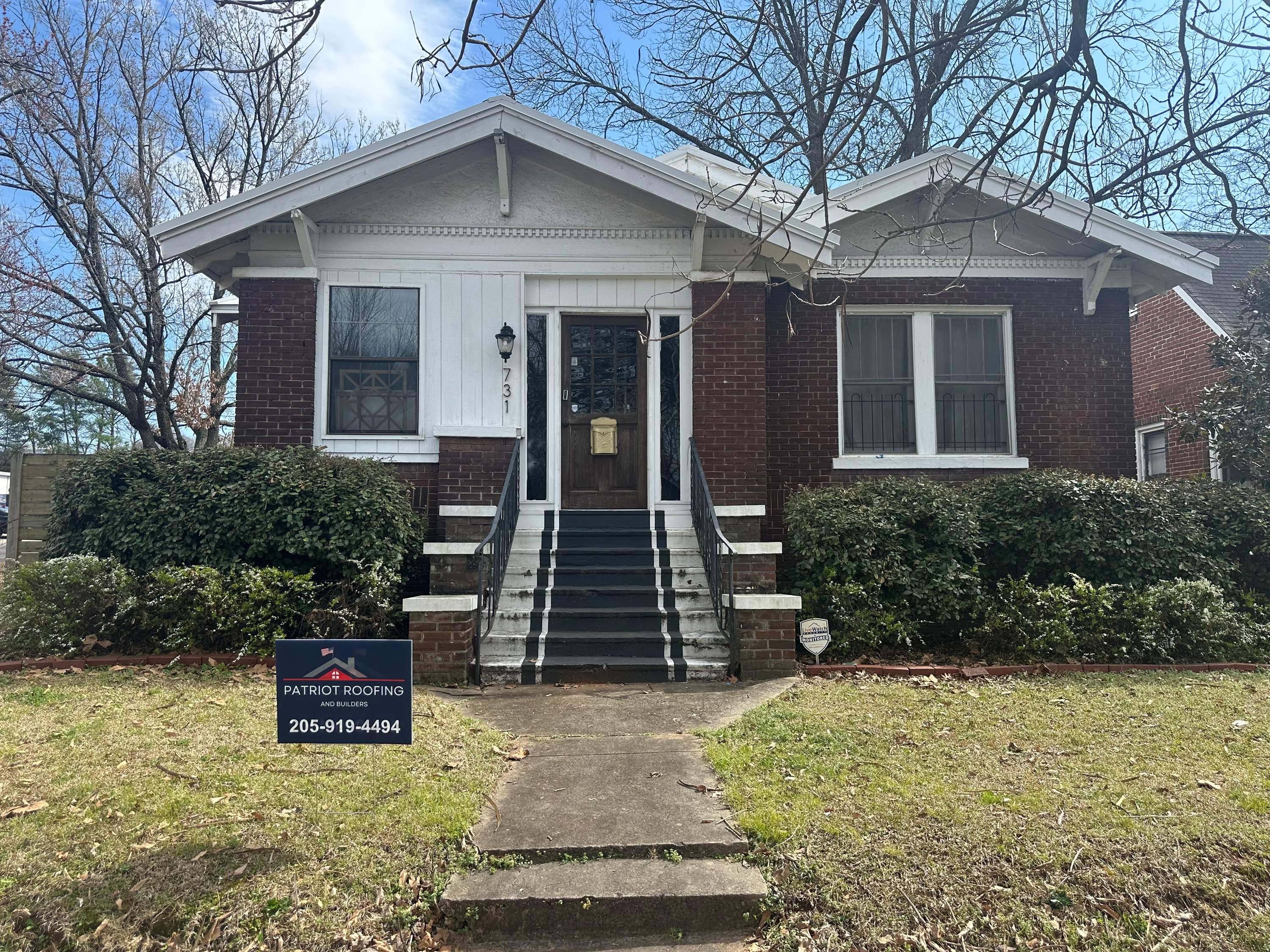
If your home sits in one of Birmingham's local historic districts, exterior changes that are visible from the street need city approval before the work starts. That approval is the Certificate of Appropriateness, issued through the Design Review Committee under the city's Planning, Engineering and Permits department. Roofing is squarely inside its scope: a change of roofing material, profile, or color on a street-facing slope is exactly the kind of alteration the committee exists to review.
Most contractors in the metro have never filed one, and most articles about roof replacement never mention it. Then a homeowner in Forest Park signs a contract, the crew shows up, and the project stalls when the city asks where the approval is. The process is not difficult. It is just invisible until it stops your job.
Local historic district or National Register? The distinction that matters
Birmingham has two kinds of "historic" neighborhoods, and they work completely differently.
A local historic district is created by city ordinance and carries design review with legal teeth. A National Register listing is an honorary designation: it recognizes a neighborhood's history, and it may open the door to tax incentives, but it does not require anyone's approval to replace a roof. Crestwood North, Bush Hills, and Glen Iris Park, for example, are National Register neighborhoods where no design review applies to your roofing project.
And to clear up the most common misconception we hear: Homewood and Mountain Brook have no residential design review at all. Mountain Brook's Villages Design Review Committee covers commercial buildings in the villages, not houses. If a contractor tells you a Homewood or Mountain Brook roof needs a historic approval, they are describing a process that does not exist. Condo and homeowners associations, like the one at Hallman Hill, are a separate private matter.
The nine districts where review applies
The city's own waiver form lists nine residential local historic districts where a Certificate of Appropriateness applies to exterior work:
Highland Park, the city's oldest local historic district
Forest Park
Norwood
Avondale Park
Red Mountain Suburbs, which covers Redmont Park
Cullom Street in Glen Iris
Anderson Place
Phelan Park
Roebuck Springs
Downtown, Five Points South, Woodlawn, and the other commercial districts have their own review track, but that is a storefront conversation, not a residential roof one.
If you are unsure whether a specific address falls inside a district boundary, the city's Historic Preservation and Urban Design division maintains the maps, and we check this for every project we quote in these neighborhoods.
How the process works, and the shortcut most people miss
The full path runs through a scheduled Design Review Committee meeting: an application with photos of the existing roof, the proposed material and color, and enough detail for the committee to judge the change against the district's design review guidelines. Build the meeting calendar into your project timeline; this is not an approval you pick up at a counter the same afternoon.
The shortcut is the one worth knowing: like-for-like work can often be approved administratively. Replacing worn architectural shingles with new architectural shingles in a compatible color is the kind of in-kind change that staff can typically sign off on without a committee appearance. Where projects earn a full review is change: a switch from shingles to metal, a dramatic color departure, or alterations to street-visible details like dormers and exposed rafter tails.
The Waiver Application, step by step
The administrative path has a name: the Waiver Application, formally the Waiver of the Design Review Requirement for Cases in Local Historic Districts, issued by the city's Urban Design Division. It is a two-page form, and it runs alongside the building permit rather than ahead of it. Here is how it actually works:
File the building permit first. The waiver asks for the permit routing number (the BLD number the city assigns in its online permit center), the parcel ID, the zoning classification, and the date of the permit application. Without a permit on file there is nothing for the waiver to release.
Describe the work plainly. The form wants the scope in a few sentences: what comes off, what goes on, and how it matches. "Tear off existing architectural shingles, replace decking as needed, install new architectural shingles in a matching color" is the level of detail staff needs. Overstating the scope invites questions; understating it voids the waiver.
Confirm nothing else is pending. Two yes/no questions ask whether the property has a case in front of the Zoning Board of Adjustment, Planning Commission, or City Council, or any other approval pending that bears on the work. For a straight re-roof the honest answer to both is no.
Initial Part II. This is the part people miss. Part II lists eleven exterior features: siding, brick, porch, stairs, roofing, windows, doors, trim, fences, walls, and driveways. You initial every feature the permit will not touch. Those initials become a binding scope limit tied to the permit number. If a crew replaces a porch column on a permit whose waiver says "no porch work," the waiver is void and the city can stop the job.
Staff signs the memo. The bottom of page one is a Memorandum to the Permitting Official. The Historic Preservation Officer either approves the waiver (sometimes with conditions spelling out the minimum repairs allowed and the method), or denies it and sends the project to a full Design Review Committee date. An approval releases the building permit.
We filed one of these in September 2026 for a Forest Park home that needed a full re-roof and a repair to storm-damaged lap siding on the second-story sidewalls. Shingle-for-shingle GAF architectural, matching fiber-cement lap in place of the damaged lap, new fascia trim at the rafter tails: all in-kind, all on the waiver, no committee date. The permit went in through the city's online portal on a Wednesday, the signed waiver went to Urban Design the next morning, and the crew was scheduled around the approval instead of in front of it.
The historic-district projects that stall are almost never rejected on the merits. They stall because nobody filed anything until the crew was already scheduled. The projects that sail through are the ones where the paperwork went in the same week the contract was signed.
Storm damage adds one nuance. Emergency protection, like tarping a hole after a limb strike, is about preventing further damage, and no committee expects you to wait on that. The permanent repair that follows is still an exterior change in a reviewed district, so we document the damage thoroughly, stabilize the roof, and get the approval moving before permanent work begins. Our storm damage team runs that sequence routinely alongside the insurance claim.
What this means for your roof project
In practice, most historic-district roof replacements are approvable without drama. Architectural shingles in period-appropriate colors are the workhorse answer on most of these houses, and staying within the district guidelines usually means matching what the neighborhood already wears, not sourcing exotic materials. Wind-rated systems fit inside those same approvable profiles, which matters because Alabama's Strengthen Alabama Homes program pays up to $10,000 toward a FORTIFIED roof; our guide to the FORTIFIED grant covers how that works. A historic address does not disqualify you from building a stronger roof.
What we handle as part of a roof replacement in Birmingham's reviewed districts: confirming whether your address is inside a district boundary, preparing the application with the photos and specifications the committee needs, pursuing the staff-level path when the work qualifies, and scheduling the project around the approval rather than in conflict with it. The roof replacement itself is the same craft as anywhere else in the metro. The difference is sequencing, and sequencing is free if you start it early.
Frequently Asked Questions
Do I need a Certificate of Appropriateness to replace my roof in Birmingham?
Only if your home is in one of the city's nine residential local historic districts: Highland Park, Forest Park, Norwood, Avondale Park, Red Mountain Suburbs (Redmont Park), Cullom Street, Anderson Place, Phelan Park, or Roebuck Springs. A National Register listing alone does not require review, and neither Homewood nor Mountain Brook reviews residential exteriors.
What is the Waiver Application, and who signs it?
It is the Urban Design Division's form for in-kind work that does not need a Design Review Committee hearing. The applicant, usually the contractor acting as the owner's agent, fills in the permit number, parcel, scope of work, and initials the exterior features that will not be touched. The city's Historic Preservation Officer approves or denies it at staff level, and an approval releases the building permit. The owner does not have to sign it, but the applicant is certifying they have the owner's authorization, and the city can ask for proof.
How long does the approval take?
Like-for-like replacements can often be approved at staff level, which is the fastest path. Anything needing the full Design Review Committee waits for a scheduled meeting, so plan the project a few weeks ahead rather than days ahead.
What happens if the work is done without one?
The city can stop work on an unapproved exterior project and require changes to bring it into compliance, which can mean redoing finished work. The application is the cheap step; skipping it is how a roof project turns into a dispute.
Does a historic district limit what roof I can buy?
Less than most people fear. The guidelines are about compatibility with the district, and quality architectural shingles in traditional colors satisfy them on most houses. Larger changes, like moving to metal, are reviewed case by case against the district guidelines.
Start the paperwork before the crew
If your home is in one of these nine districts and the roof is due, the order of operations is the whole game: confirm the boundary, file the permit, file the waiver the same week when the work qualifies, and let the approval and the inspection run in parallel. We have done the sequencing before and we will tell you plainly whether your project needs a committee date or a signature. Either way, the answer is knowable before you spend a dollar on materials.
Ready to stop researching and get real answers?
If this article helped you spot a roofing, siding, or gutter issue, the next step is simple. Get honest guidance, a professional inspection, and a clear plan from the Patriot Roofing team.
Justin Johnson
Owner / Licensed Home Builder
Justin is the Co-Owner of Patriot Roofing & Builders and a Licensed Alabama Home Builder. With extensive experience in high-performance exterior systems and storm restoration, he brings a hands-on, technical perspective to every project across the Greater Birmingham area.
More About UsRoof Replacement in Birmingham
 11 photos
New Roof in Crestwood South Birmingham, Alabama
Crestwood South
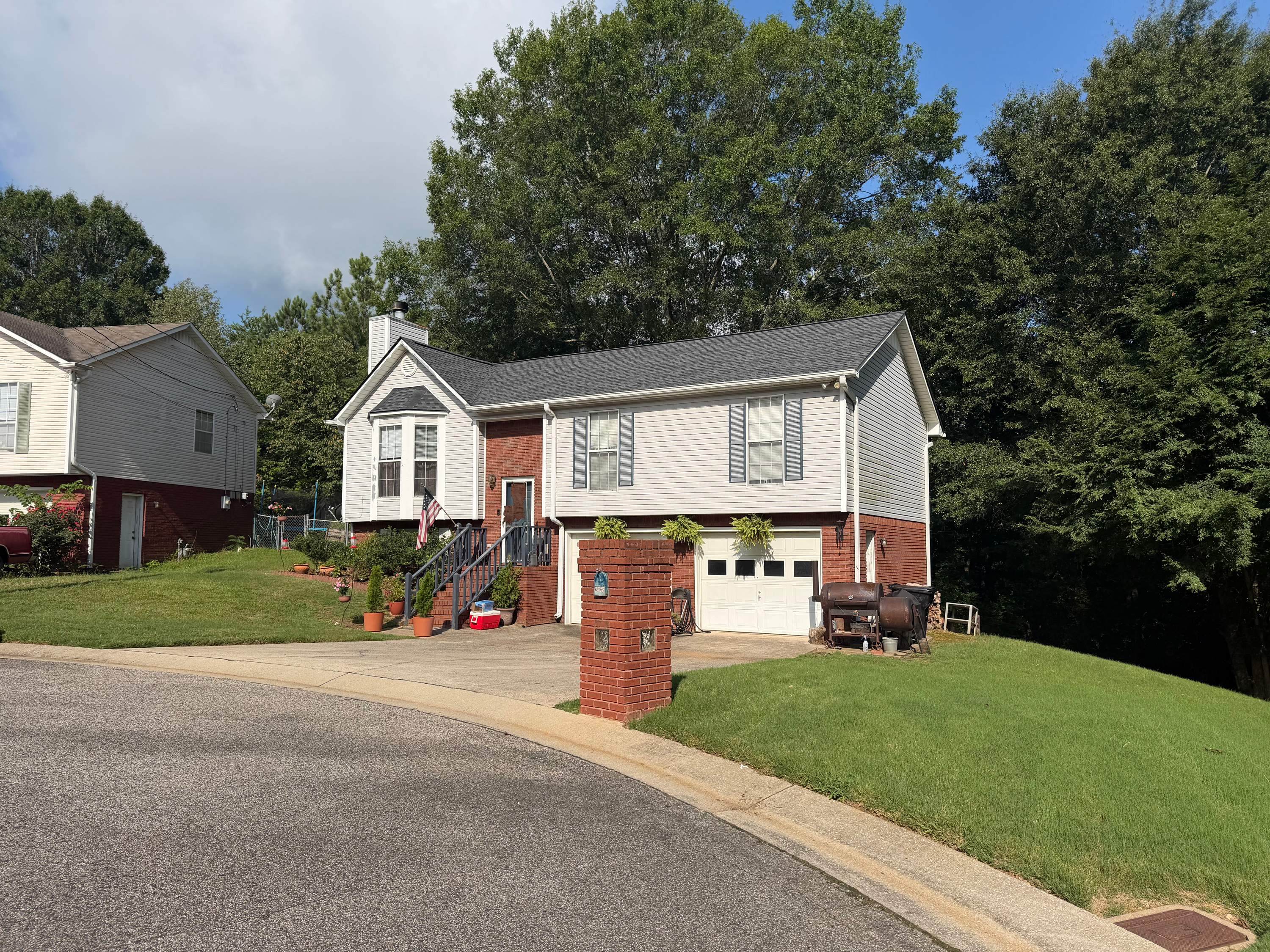
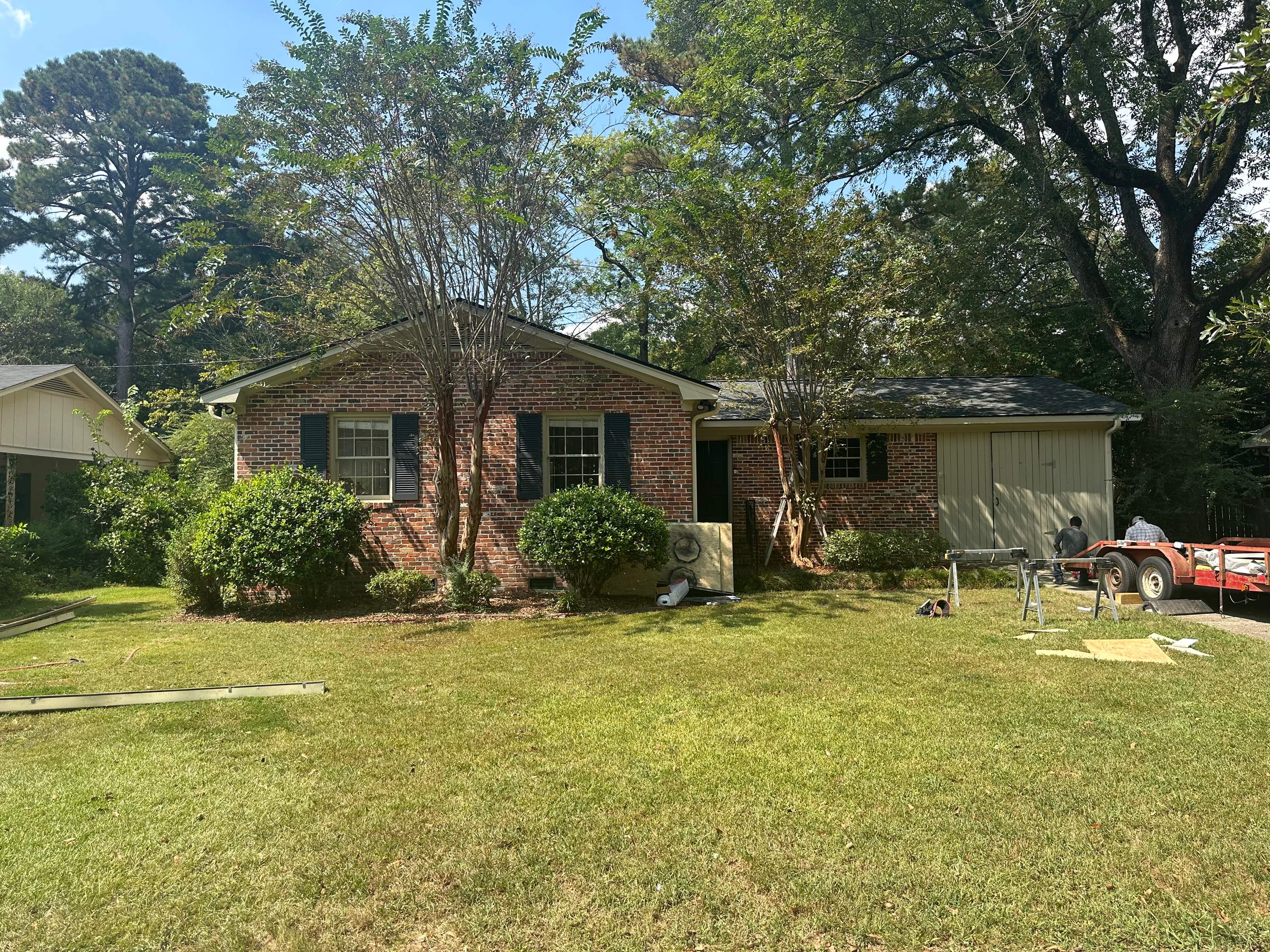
This split-level home in the Crestwood South neighborhood of Birmingham received a complete roof replacement to resolve issues with aging shingles. The project involved stripping the old layers down to the original horizontal wood plank decking, which was spaced with gaps between the boards. The crew re-decked the entire roof with new OSB sheathing over the plank decking to create a solid, continuous nailing surface and prevent future leaks. New gray dimensional architectural shingles were then installed across the various roof sections, valleys, and ridges. To complete the system, new white gutter installation was carried out along the roofline, alongside updated plumbing vents and flashing.
 12 photos
New Roof in the Pebble Lake Neighborhood Birmingham, AL
Pebble Lake
Tucked away in the Pebble Lake neighborhood of Birmingham, this two-story home received a complete roof replacement. Fresh OSB decking boards were installed over the rafters to establish a flat, solid foundation before laying GAF StormGuard leak barrier underlayment. The finished exterior features dark charcoal gray architectural shingles that provide a distinct dimensional texture across the multi-gabled roofline. Matching black plumbing vent boots and ridge caps were carefully integrated to ensure weather-tight seals. This clean new look pairs naturally with the house's light siding, blue shutters, and brick accents.
 6 photos
New Roof in the Glen Iris Neighborhood, Birmingham, AL
Glen Iris
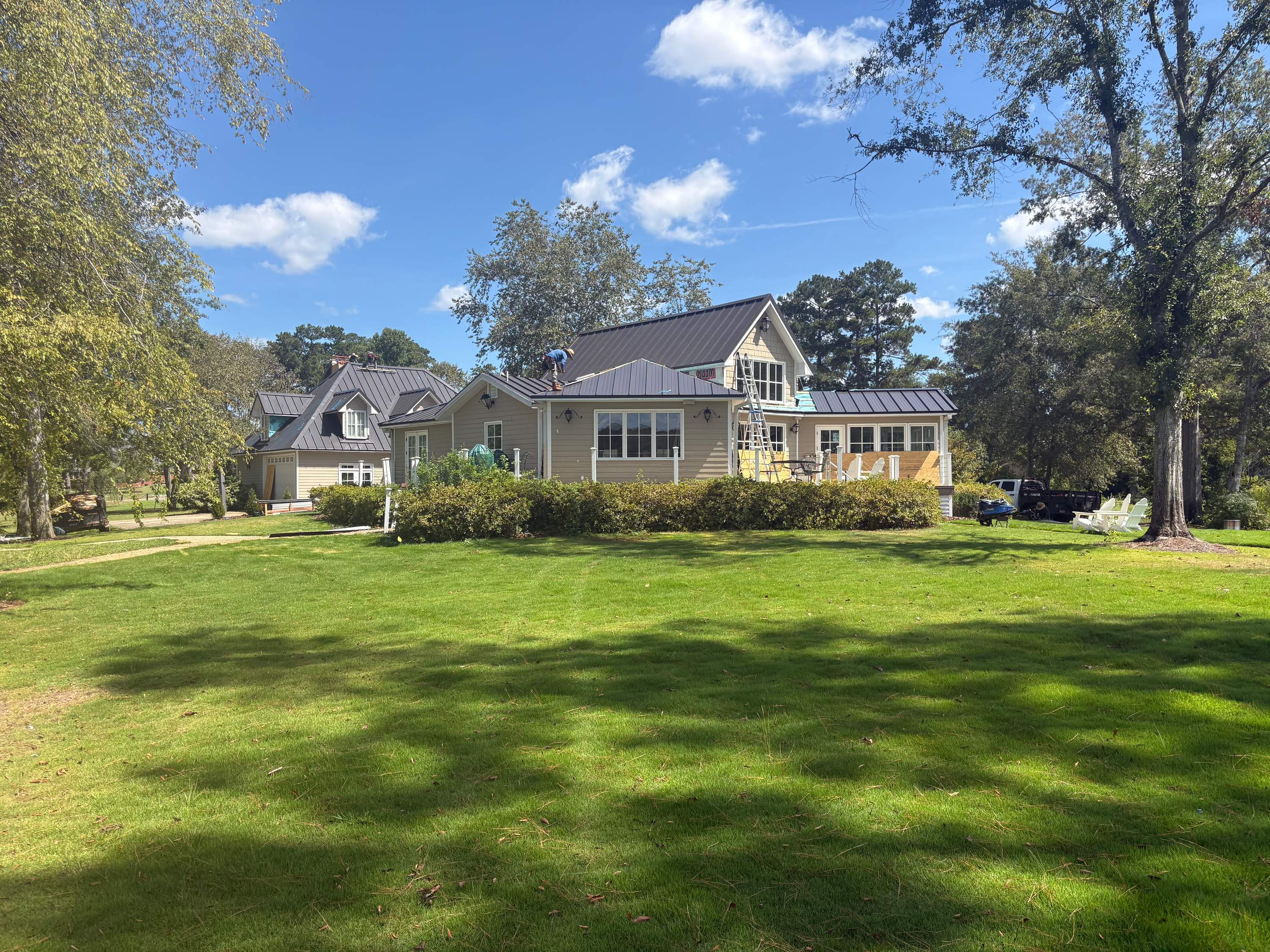
This residential property in the Glen Iris neighborhood of Birmingham recently received a full roof replacement as part of a storm damage restoration project. The old, weathered shingles were replaced with multi-toned gray architectural shingles that span the home's multi-gabled roofline. Matching ridge cap shingles were installed along the roof peaks to provide a clean finish and proper ventilation. At the roof's intersection with the red brick chimney, fresh dark flashing was integrated around the base to secure the seal beneath the copper-colored metal cap. The update concludes with clean white gutters and drip edges along the roofline to protect the siding below.
You Might Also Like
How Long Does a Roof Last in Alabama? Every Material, Honestly