
Key Takeaways
- Heavy pine needle accumulation traps moisture along roof eaves and valleys in heavily wooded local neighborhoods.
- Elevated wind shear along ridges like Shades Mountain lifts architectural shingle tabs, breaking factory seal strips and letting wind-driven rain under flashing.
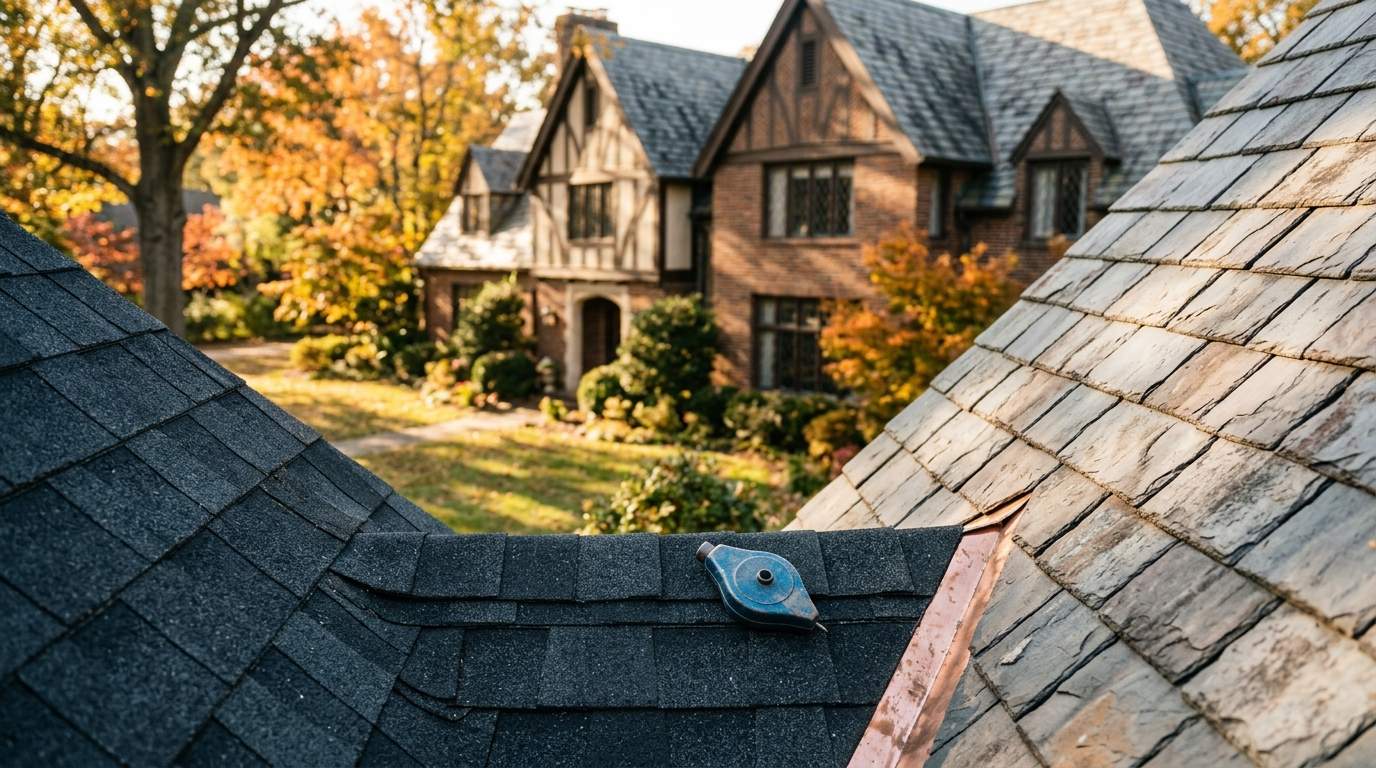
- Failing step flashing around brick chimneys and dormers remains the primary source of interior ceiling stains in established area homes.
Need Roof Repair in Vestavia Hills?
If you're looking for help in Vestavia Hills, visit our dedicated roof repair page for local service details, project examples, and the next steps for your home.
Primary Factors Behind Roof Leak Vulnerability in Jefferson County
A faint discoloration appears near a hallway light fixture after a prolonged downpour. Most homeowners try dabbing the sheetrock with stain-blocking primer, assuming a single loose shingle overhead caused the problem. When our crew climbs into the attic, we trace damp insulation back to a rusted step flashing bend behind a chimney cricket three feet higher up. Water rarely drops straight down from where it penetrates the outer shingle layer. In established neighborhoods across the area, wind-driven rain pushes under aged roofing components and runs along rafters until reaching a seam in the interior sheetrock. Understanding where these breaches originate helps you catch structural moisture damage before it requires major plywood deck replacement.
Failing Step Flashing and Wall Transitions
Step flashing along sidewalls, dormers, and brick chimneys accounts for a massive portion of localized roof leaks in established Vestavia Hills neighborhoods. Metal flashing sheets rely on layered installation and intact sealant to divert water away from vertical wall intersections. Over time, continuous thermal expansion, structural settling, and aged caulking create subtle gaps where wind-driven rain easily penetrates.
When flashing around a brick chimney corrodes or pulls away from mortar joints, water trickles down behind exterior brickwork or siding. This moisture bypasses the shingles entirely, saturating framing and insulation long before an active dripping sound alerts you inside the home. Inspecting these metal transitions regularly prevents hidden structural decay beneath your roof deck.
For a comprehensive evaluation of high-risk flashing areas, schedule a professional roof inspection in Vestavia Hills to detect metal fatigue early.
Expert Field Note from Justin Johnson: On established homes built throughout the 1980s and 1990s around Shades Mountain, step flashing is usually the first component to rust through. The classic telltale sign isn't a massive ceiling drip, but a subtle brownish streak trailing down exposed exterior brickwork or attic framing after heavy rain.
Pine Needle Buildup and Heavy Tree Canopy Wear
Dense pine canopies and mature oak trees accelerate shingle deterioration across heavily wooded properties in Rocky Ridge and Cahaba Heights. Falling needles and organic matter collect inside roof valleys, behind chimney crickets, and along gutter lines, creating dense damp dams.
These organic debris piles hold moisture directly against asphalt shingles for days following rainstorms. Continuous dampness breaks down the protective mineral granules, softening the asphalt backing and allowing rot to take hold along fascia boards and soffit overhangs.
- Valleys and Low Slopes: Pine needles pack tightly into roof valleys, forcing water to back up horizontally under shingle laps.
- Eaves and Gutters: Blocked gutters cause water to pool along roof edges, rotting fascia boards. Professional gutter repair in Vestavia Hills stops this standing water from creeping upward into structural subflooring.
- Shade and Algae Growth: Prolonged tree shade prevents wet roofs from drying quickly, accelerating moss growth that lifts shingle tabs.
Wind Shear and Lifted Shingles Along Ridgelines
High-elevation properties along Shades Mountain and Highway 31 endure higher wind velocities than low-lying valley properties. Severe weather cells push strong updrafts against steep-slope roof lines, lifting aging shingle edges and breaking their thermal adhesive seals.
Once a shingle tab loses its factory seal strip, wind-driven rain blows directly underneath the shingle course onto bare underlayment. Over time, repeated wind uplift exposes underlying roofing nails, creating tiny pathways for water to seep directly through plywood decking. If you observe lifted or missing shingle tabs after high winds, prompt roof repair in Vestavia Hills stabilizes exposed underlayment before moisture damages interior ceilings.
Identifying Specific Roof Leak Sources and Repair Scope
Distinguishing between minor surface breaches and major structural leak pathways helps homeowners make practical repair decisions. The severity of the leak determines whether targeted repairs or broader component replacements are necessary.
To understand standard pricing expectations without unexpected fees, read our breakdown on how to avoid hidden roof repair fees in Vestavia Hills, AL.
| Leak Cause | Common Warning Sign | Repair Approach | Typical Cost Range |
|---|---|---|---|
| Pipe Boot Failure | Small ring stain around bathroom vent | Replace neoprene boot collar and surrounding shingles | Minor repair ($150 – $500) |
| Step Flashing Separation | Water stains along wall joints | Remove lower shingle courses, install new lead/copper step flashing | Standard repair ($450 – $1,500) |
| Valley Debris Damming | Discolored sheetrock near lower roof slopes | Clear organic debris, replace damaged underlayment and valley metal | Standard repair ($450 – $1,500) |
| Rotted Roof Decking | Spongy deck surface or sag near eaves | Cut out compromised plywood decking, replace framing, apply membrane shield | Major repair ($1,500 – $5,000+) |
Most localized leaks on architectural shingle roofs fall within minor to standard repair brackets ($150 – $1,500). If water damage has soaked underlying plywood across multiple rafters, major structural decking repairs typically cost between $1,500 and $5,000+. For complete structural evaluation guidelines, consult our detailed Vestavia Hills roof repair guide.
Age-Related Shingle Blistering and Granule Loss
Asphalt architectural shingles naturally degrade under intense sun exposure and seasonal temperature shifts. Over a shingle's 20-to-30-year lifespan, protective oils in the asphalt dry out, causing shingle tabs to curl, crack, or lose mineral granules.
Granule loss leaves the underlying fiberglass mat exposed to direct sunlight and rain. When water hits un-granulated shingles, moisture slowly permeates the fiberglass backing, causing slow leaks into attic spaces. Upgrading aging roofs with modern GAF Timberline architectural shingles engineered for 130 mph wind resistance prevents premature material breakdown. If shingle deterioration spreads across multiple roof slopes, evaluating full roof replacement in Vestavia Hills ensures complete long-term protection.
Frequently Asked Questions
How do I know if my roof leak is an emergency?
A roof leak becomes an emergency if active water is dripping into living spaces, causing ceiling sheetrock to sag, or threatening electrical fixtures. Immediate tarping and rapid leak stabilization prevent structural rot and interior drywall collapse.
Can a small ceiling stain wait until next season for repair?
No, delaying repair on a small ceiling stain allows trapped moisture to rot plywood decking and breed mold inside attic insulation. What appears as a faint spot often masks weeks of water accumulation behind the wall.
Why does my roof leak only during heavy wind-driven rain?
Wind-driven rain forces water horizontally under loose shingle edges and compromised wall flashing that normal vertical rainfall cannot reach. This indicates broken shingle seal strips or deteriorated flashing sealant along roof walls.
Will homeowner insurance cover roof leak repairs in Vestavia Hills?
Insurance coverage depends on whether the leak resulted from sudden storm damage, such as wind-lofted shingles, or long-term wear and maintenance neglect. Storm-related damage is usually covered after meeting your policy deductible, whereas wear-and-tear repairs are an out-of-pocket maintenance expense.
Protecting Your Vestavia Hills Property from Roof Leaks
Catching minor roof breaches early preserves structural decking, protects interior drywall, and prevents costly emergency repairs down the road. Addressing minor flashing gaps or pine needle dams immediately keeps your roof system functioning reliably through severe weather cycles.
Walk out to your driveway, step back, and examine your roof's valleys and lower gutter lines with binoculars. If you spot accumulated pine needle piles, lifted shingle tabs, or dark streaks beneath chimney step flashing, schedule a professional roof inspection to lock down the leak source before water enters your home.
Ready to stop researching and get real answers?
If this article helped you spot a roofing, siding, or gutter issue, the next step is simple. Get honest guidance, a professional inspection, and a clear plan from the Patriot Roofing team.
Justin Johnson
Owner / Licensed Home Builder
Justin is the Co-Owner of Patriot Roofing & Builders and a Licensed Alabama Home Builder. With extensive experience in high-performance exterior systems and storm restoration, he brings a hands-on, technical perspective to every project across the Greater Birmingham area.
More About UsYou Might Also Like
5 Factors Driving Roof Repair Costs in Hoover, AL