Evaluating Wind Damage on an Aging Vestavia Hills Roof
The blue tarp was already flapping violently against the brick chimney when I pulled into the driveway on Pumphouse Road. It was 7:30 AM on a Tuesday, less than twelve hours after a massive spring squall had pushed over Shades Mountain and battered this part of Vestavia Hills. The homeowner, a retired structural engineer, was standing in his front yard pointing at a bare patch of roof decking where a dozen three-tab shingles used to be. He requested a quick patch before the next rain band hit that afternoon. I grabbed my ladder and harness, knowing immediately that a patch on a roof this age would require serious evaluation.
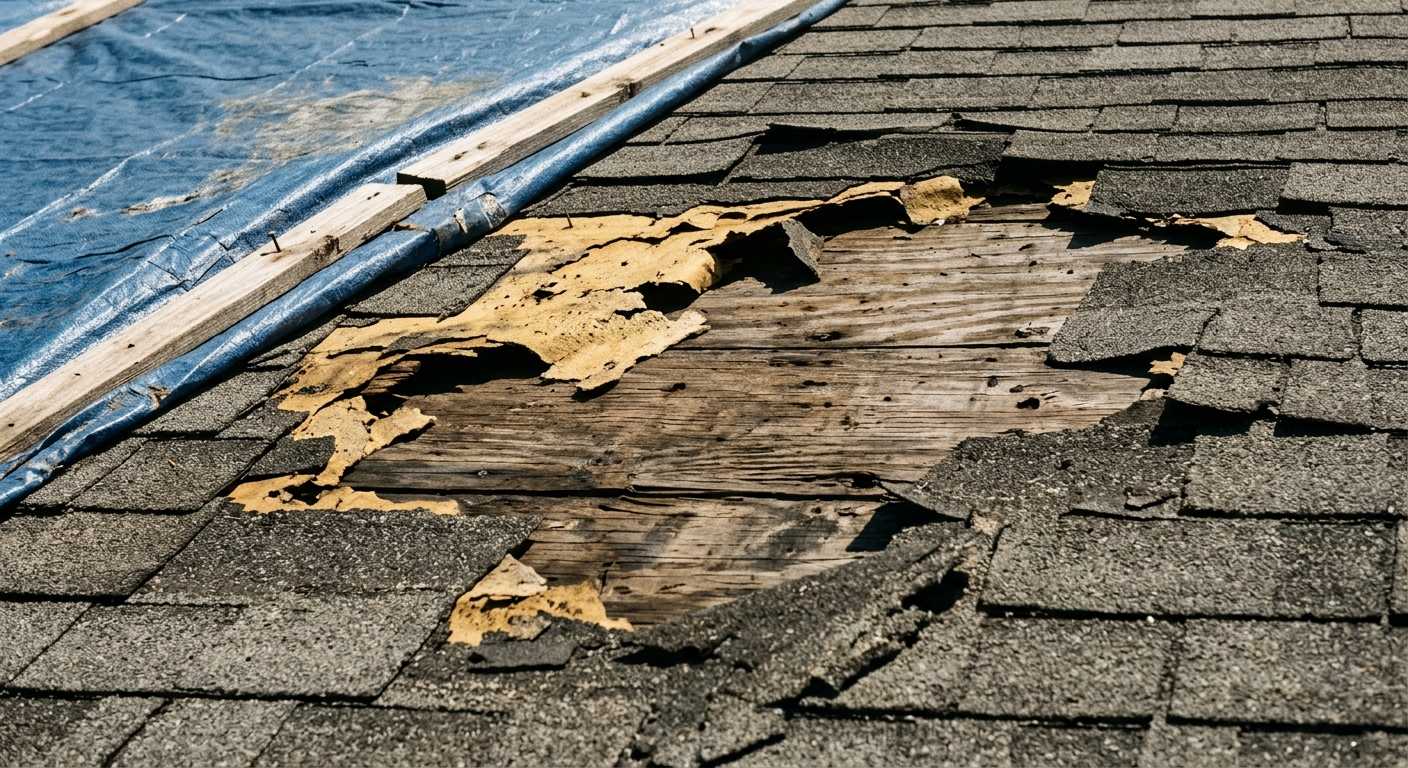
This house was built in 1984, and the current shingles had been baking in the Alabama sun for at least eighteen years. When I climbed onto the pitch, the damage extended far beyond the missing pieces near the chimney. I walked the ridgeline and found extensive chatter marks—places where high-velocity wind had lifted the brittle shingles, snapped the manufacturer's adhesive bond, and slammed them back down. To the untrained eye from the lawn, the roof looked intact. Up close, nearly thirty percent of the slopes facing southwest were completely unsealed.
I lifted one of the loose shingles to check the underlayment, and the felt paper crumbled like dry leaves. The decking underneath consisted of 3/8-inch plywood, a standard material for that era but completely inadequate for modern wind resistance codes. Water from the storm had already bypassed the torn felt, soaking into the thin plywood and causing widespread delamination. I climbed back down and showed the homeowner the photos on my phone. I explained that driving new nails into that compromised, outdated decking would fail the next time a severe storm rolled through.
My crew arrived within the hour to provide emergency tarping across the entire damaged slope, stopping the water intrusion just as the afternoon rain started. The next morning, I met the insurance adjuster in the driveway. We presented documented proof of the broken seals, the granular loss from the accompanying hail, and the structural inadequacy of the saturated decking. The adjuster agreed that a spot repair was impossible without violating current building codes. The insurance company approved a full structural roof replacement, including upgrading the decking to half-inch OSB to meet modern wind-load requirements. This outcome saved the homeowner thousands of dollars in future leak repairs and ensured the property could withstand the next severe weather season.
Need Storm Damage Restoration in Vestavia Hills?
If you're looking for help in Vestavia Hills, visit our dedicated storm damage restoration page for local service details, project examples, and the next steps for your home.
Identifying Hidden Vulnerabilities in Pre-1990 Construction
Older homes in neighborhoods like Vesthaven and Altadena Valley often hide outdated roofing components beneath their shingles. These legacy materials degrade over decades, leaving the entire structural envelope highly vulnerable to peak spring storms. A visual inspection from the street rarely reveals the true condition of the underlying deck and moisture barriers.
We consistently find specific structural weaknesses when assessing established properties. Homeowners should request thorough roof inspections to identify these age-related failures before a major weather event forces an emergency response. The most common hidden vulnerabilities include:
- Spaced plank decking or thin 3/8-inch plywood that warps under heavy moisture.
- Brittle, organic felt underlayment that disintegrates when exposed to high winds.
- Improperly flashed masonry chimneys that allow water to bypass the shingle layer.
- Inadequate attic ventilation systems that bake the shingles from the inside out.
Navigating Code Upgrades During Storm Damage Restoration
Replacing a storm-damaged roof on an older home automatically triggers compliance with modern building codes. Municipal regulations in Jefferson County dictate specific wind-load requirements, ventilation standards, and structural fastening patterns that did not exist thirty years ago. Failing to implement these mandatory upgrades will result in failed city inspections and compromised warranties.
We manage this process by documenting the exact disparities between your existing system and current code requirements. This technical documentation proves to your insurance carrier that a simple patch is illegal and unsafe. Upgrading to half-inch OSB decking and installing continuous ridge vents transforms your storm damage restoration in Vestavia Hills from a basic repair into a comprehensive structural improvement.
Securing the Property with Immediate Emergency Tarping
Water intrusion causes exponential damage to drywall, insulation, and hardwood floors within hours of a storm. Applying a heavy-duty, properly secured tarp over compromised roofing sections stops the immediate bleeding while you coordinate with your insurance adjuster. You must stabilize the exterior envelope before any interior remediation can begin.
Our crews use wooden batten strips to anchor temporary tarps directly to the structural framing, preventing the plastic from blowing away during secondary rain bands. This rapid response preserves the structural integrity of your attic space. When you need urgent roof repair services, fast tarping prevents a localized leak from destroying entire rooms below.
Choosing High-Wind Materials for Alabama Weather
Upgrading to Class 4 impact-resistant shingles provides the most reliable defense against the severe thunderstorms common to Central Alabama. These reinforced materials feature specialized polymer modifications that prevent hail from bruising the fiberglass matting. Installing these advanced systems significantly reduces your risk of facing another complex insurance claim next spring.
We install top-tier GAF architectural systems designed specifically to withstand straight-line winds and heavy hail. These high-performance shingle installations utilize advanced adhesive strips that lock the materials together, preventing the chatter and blow-offs that plague older roofs. Many local insurance providers also offer premium discounts for homes protected by these reinforced materials.
Frequently Asked Questions
How much does storm damage roof repair cost in Vestavia Hills?
Minor wind damage repairs typically cost between $400 and $1,200, depending on the steepness and material availability. Full replacements on older homes requiring decking upgrades range from $12,000 to $25,000. Your out-of-pocket cost is usually limited to your insurance deductible if the damage stems from a covered weather event.
Will my homeowners insurance cover building code upgrades?
Most standard policies include an ordinance or law endorsement that covers the extra cost of bringing an older home up to current building codes. We document these requirements during our inspection to ensure the adjuster includes items like thicker decking or improved ventilation in your payout.
How long do I have to file a hail damage claim in Alabama?
Insurance providers typically require you to file a claim within one year of the specific date of loss. Waiting for a visible ceiling leak often pushes you past this deadline, forcing you to pay for the replacement entirely out of pocket.
What is the first step after a severe spring storm hits?
Call a licensed contractor to perform an immediate assessment and install temporary tarping over any compromised areas. Do not climb on the roof yourself, as storm-damaged decking and loose granules create extreme fall hazards.
Securing Your Home Before the Next Storm
Spring weather patterns in Jefferson County leave narrow windows for essential structural repairs. Schedule a comprehensive assessment of your exterior envelope today to identify hidden vulnerabilities before the next major front arrives. Contact our office to arrange a site visit and get your property stabilized immediately.
Ready to stop researching and get real answers?
If this article helped you spot a roofing, siding, or gutter issue, the next step is simple. Get honest guidance, a professional inspection, and a clear plan from the Patriot Roofing team.
Justin Johnson
Owner / Licensed Home Builder
Justin is the Co-Owner of Patriot Roofing & Builders and a Licensed Alabama Home Builder. With extensive experience in high-performance exterior systems and storm restoration, he brings a hands-on, technical perspective to every project across the Greater Birmingham area.
More About UsYou Might Also Like
What Causes Roof Leaks in Vestavia Hills, AL?