
Replacing a Collapsed Pine Fence in Brookwood Forest
The homeowner’s golden retriever was already halfway into the neighbor's yard when I pulled up to the property in Brookwood Forest. A massive section of their six-foot pine privacy fence lay flat across the azalea bushes, completely uprooted by a standard Tuesday afternoon thunderstorm. The homeowner stood on the patio with his hands on his hips, visibly frustrated because he had written a check for this exact fence less than three years ago. I walked over to the collapsed section and kicked the base of the nearest post.
The wood crumbled like wet cardboard, and the concrete footing popped out of the clay soil like a loose tooth. The previous crew had committed the cardinal sin of fence building in our area. They dug shallow holes, dropped the posts in, and poured dry concrete mix straight from the bag, hoping the ground moisture would cure it. Our local clay soil holds onto water like a sponge, especially under the dense tree canopy of Jefferson County.
Need Privacy Fences in Mountain Brook?
If you're looking for help in Mountain Brook, visit our dedicated privacy fences page for local service details, project examples, and the next steps for your home.
That trapped moisture turned the untreated pine posts into mush right at the soil line. The wind did not knock this fence down; hydrostatic pressure and rot did the heavy lifting long before the storm arrived. I sat down with the homeowner at his patio table and explained exactly what we needed to do differently. We refused to merely stand the old panels back up and brace them.
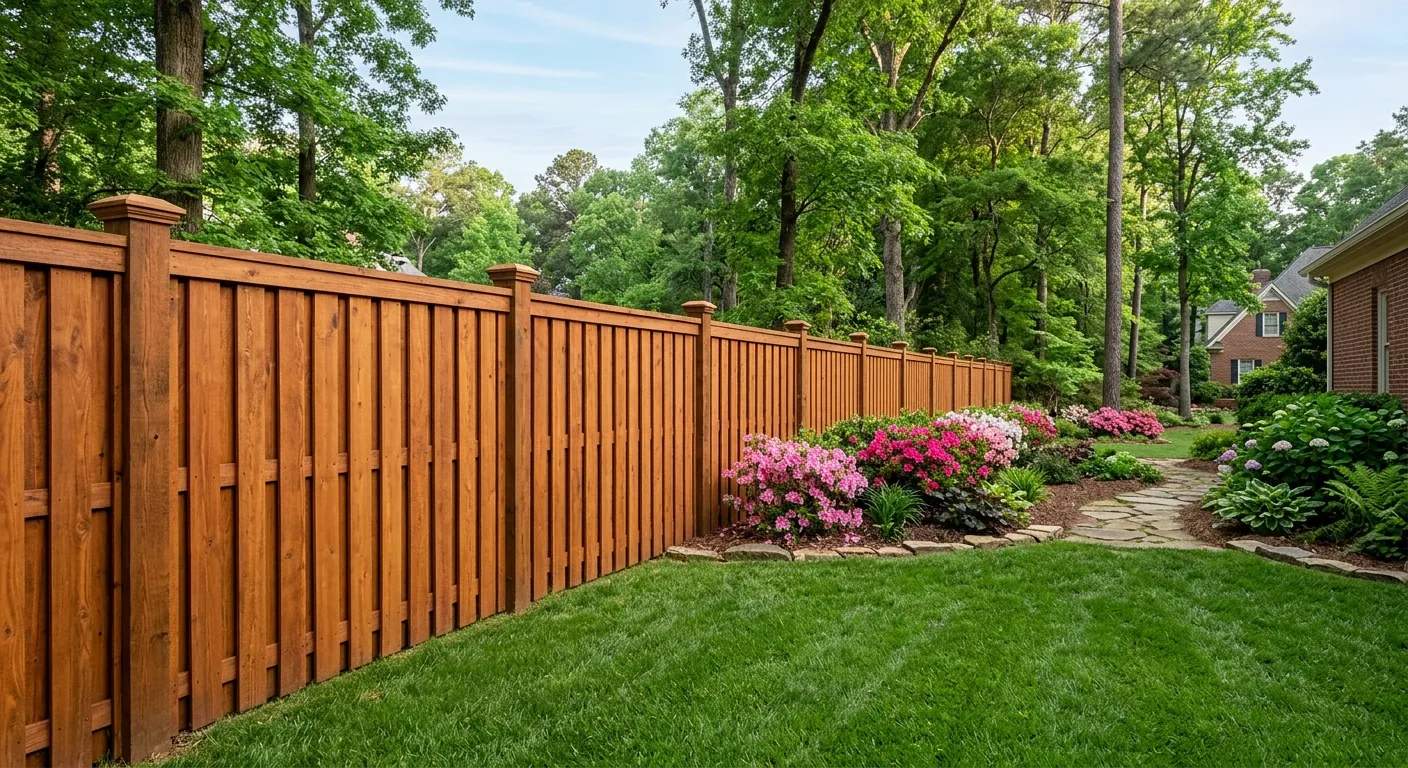
We had to extract every single failed footing, dig past the root systems of the mature oaks lining his property, and set new posts in properly mixed, professional-grade concrete. I showed him how we crown the concrete at the base to shed water away from the wood, preventing the exact rot that destroyed his previous investment. We spent the next four days tearing out the rotten pine and installing a shadowbox-style Western Red Cedar fence. The shadowbox design allows wind to pass through the boards, significantly reducing the wind load during our spring gully washers.
We set those cedar posts deep, factoring in the steep grade of his backyard to ensure the top line of the fence flowed naturally with the topography. We secured every single picket with polymer-coated, exterior-grade screws instead of the cheap galvanized nails the last guys used. Those nails had already started bleeding black rust streaks down the old boards. Using the right fasteners adds a fraction to the material cost but saves you thousands in premature repairs down the road.
By Friday afternoon, the golden retriever was safely contained, and the homeowner had a perimeter built to outlast the Alabama weather. This is the reality of building custom privacy fences in Mountain Brook. You cannot cut corners on the foundation and expect the structure to stand.
The "Set It and Forget It" Installation Myth
The biggest misconception in this industry is that buying an expensive material automatically guarantees a long-lasting perimeter. I climbed a roof ladder in Cherokee Bend last week and looked down at a neighbor's brand-new enclosure. The crew had used interior-grade fasteners on treated pine boards, and within six months, those screws will rust, bleed black streaks down the wood, and snap under wind load. It costs the homeowner thousands in premature repairs to save the contractor forty bucks on hardware.
We approach every project differently by refusing to compromise on the invisible details. My team uses exterior-grade, polymer-coated or stainless fasteners on every single board we install. We also focus heavily on ground preparation, because our local rocky terrain requires precise post-setting to prevent leaning.
Properly anchoring a structure involves understanding how water moves across your specific lot. We ensure water does not pool at the base of your posts by crowning the concrete footings. The longevity of your investment depends entirely on the integrity of the foundation and the quality of the hardware used.
Navigating Clay Soil and Steep Grades
Building a stable enclosure for Mountain Brook homes requires adapting to aggressive slopes and dense, moisture-retaining clay. We evaluate the topography of your lot before digging a single hole to determine the proper installation method. Steep grades often require a stepped or racked installation technique to keep the bottom rails parallel to the ground without leaving massive gaps for pets to escape.
Our crews are experienced in handling the unique topographical challenges found throughout Jefferson County. We dig deep past the soft topsoil to anchor your posts firmly in stable ground. This prevents the heavy, wet clay from pushing the posts out of alignment during the freeze-thaw cycles of an Alabama winter.
We follow a strict process for every post we set to guarantee maximum stability.
- Digging holes to a minimum depth of 24 to 36 inches to bypass active root zones.
- Mixing professional-grade concrete outside the hole for a consistent, strong cure.
- Crowning the top of the concrete footing to direct rainwater away from the wooden post.
- Allowing the foundation to fully cure before attaching heavy rails and pickets.
Choosing Materials for the English Village Canopy
The micro-climate under the heavy tree cover in areas like English Village is significantly more humid than elevated parts of the city. We select materials based entirely on their ability to resist mildew, rot, and constant shade. You need products that can handle heavy organic debris without deteriorating rapidly.
We offer a comprehensive suite of residential options tailored to these specific environmental stressors. As experienced local privacy fence builders, my team will walk your lot and recommend the best fit for your specific moisture levels. Each material brings distinct advantages depending on your property layout and maintenance preferences.
Here are the most reliable options we install for local properties:
- Western Red Cedar: Naturally resists rot and insects while providing a classic, stately appearance.
- Pressure-Treated Pine: A cost-effective, durable option that requires regular sealing to fight off our intense humidity.
- Low-Maintenance Vinyl: Never needs painting, will not rot, and cleans up easily with an occasional power wash.
- Ornamental Aluminum: Perfect for securing pools or establishing boundaries without blocking your view of the woods.
Preparing Your Perimeter for Peak Spring Storms
High winds and heavy rain expose every shortcut taken during a substandard installation. We build our structures to handle the severe straight-line winds that roll off the Appalachian foothills every spring. A solid six-foot barrier acts like a massive sail, meaning the wind load is transferred directly to the posts and fasteners.
You can spot a failing enclosure long before a storm actually knocks it over. Walk your fence line and push firmly on the posts; if they wobble more than an inch, the subterranean footing has likely failed. Check your gate hinges and latches to ensure they are firmly anchored to the framing.
If your property took a hit during a recent blow, do not wait for the damage to spread. We handle emergency storm damage restoration to secure your yard quickly. Patching a leaning section with scrap wood only delays the inevitable collapse.
Frequently Asked Questions
How much does a privacy fence cost per foot in Mountain Brook?
Costs vary significantly based on your choice of material, ranging from pressure-treated pine to premium vinyl. We offer free, on-site consultations to measure your yard and provide a precise price per linear foot. Our quotes are honest, fair, and account for the specific grading challenges of your lot.
Which material handles Mountain Brook's humidity best?
Vinyl and Western Red Cedar are excellent choices for our high-humidity environment. Vinyl is entirely impervious to moisture, while cedar contains natural oils that resist rot and mildew. If you choose pressure-treated pine, you must commit to applying a high-quality sealant every few years.
What are the typical height restrictions for residential fences?
Most residential zones in our area limit backyard enclosures to a height of six or eight feet. You must obtain a permit before construction begins to ensure compliance with property line setbacks and utility easements. We handle this entire process to ensure your project meets all local requirements.
Can you build a fence on a severely sloped yard?
Yes, we specialize in building on the steep grades common throughout the area. We use racking or stepping techniques to ensure the structure remains secure and visually appealing without leaving large gaps at the bottom. Proper post anchoring is critical to prevent leaning on these aggressive slopes.
Don't Wait for the Next Gully Washer
Ignoring a leaning post or rotting base board will only cost you more money when the entire line eventually gives way. My crew handles everything from complete roof replacements to heavy-duty perimeter builds, and we back our work with a 3-year workmanship warranty. Give me a call this week, and I will personally come out to measure your yard and walk you through the options.
Ready to stop researching and get real answers?
If this article helped you spot a roofing, siding, or gutter issue, the next step is simple. Get honest guidance, a professional inspection, and a clear plan from the Patriot Roofing team.
Justin Johnson
Owner / Licensed Home Builder
Justin is the Co-Owner of Patriot Roofing & Builders and a Licensed Alabama Home Builder. With extensive experience in high-performance exterior systems and storm restoration, he brings a hands-on, technical perspective to every project across the Greater Birmingham area.
More About UsYou Might Also Like
Budgeting for Security: How Much Does Chain Link Fence Cost Installed in Irondale, AL?
March 24, 2026
500 Ft Privacy Fence Cost: A Guide for Mountain Brook Estates
March 1, 2026